
New York City runs on tight schedules, packed commutes, long workdays, and too many meals eaten on the go. For many busy professionals, dental care can feel like one more thing competing for time. But a consistent daily oral hygiene routine does not have to be complicated or time-consuming to be effective.
In fact, the best routine is usually the one you can actually maintain. That means choosing practical habits that fit into a real New York lifestyle, whether you are rushing to the subway in Midtown Manhattan, grabbing coffee between meetings, or getting home late after a long day.
A good routine does more than keep your breath fresh. It helps prevent cavities, gum disease, enamel wear, and the kind of dental problems that often show up at the worst possible time. If you are trying to protect your smile while managing a packed schedule, this guide breaks down exactly what to do, when to do it, and where people often go wrong.
Why does a consistent oral hygiene routine matter?
Your mouth is exposed to food, drinks, bacteria, and acid all day long. Every time you eat or drink something other than water, plaque bacteria begin breaking down sugars and starches. That process produces acids that can weaken enamel and irritate gums.
A reliable daily oral hygiene routine helps by:
- Removing plaque before it hardens into tartar
- Lowering the risk of cavities
- Helping prevent gingivitis and gum disease
- Reducing bad breath
- Protecting dental work like fillings, crowns, and implants
- Supporting overall health, since gum disease is linked with several systemic conditions
For busy New Yorkers, the biggest challenge is not knowing what to do. It is doing it consistently. The goal is not a perfect routine. The goal is a realistic one.
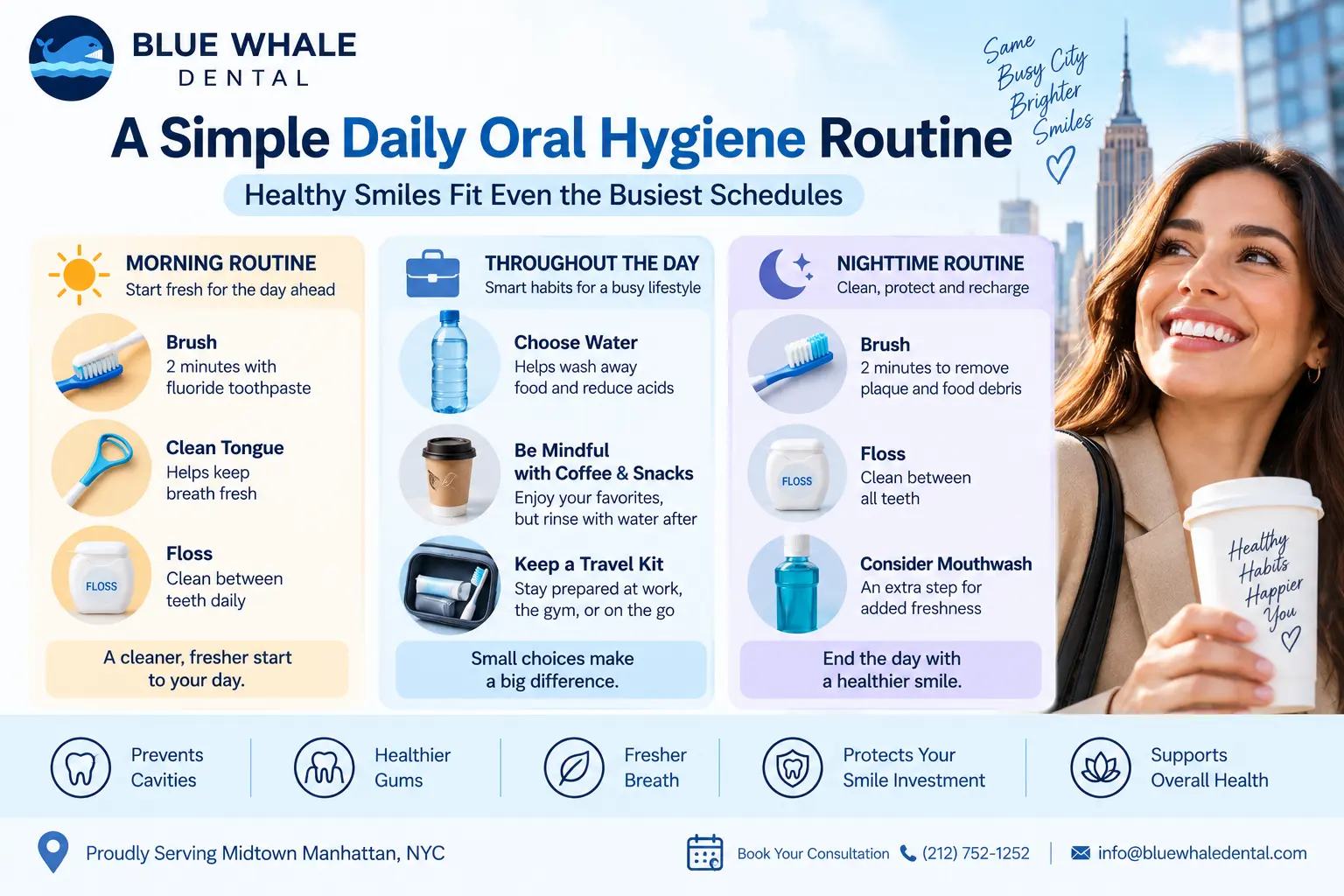
The best morning oral hygiene routine
Morning is when many people are most rushed, but this is still an important part of the day to clean your mouth. Overnight, bacteria build up while saliva production drops. That is why many people wake up with bad breath or a coated feeling on the tongue.
Step 1: Brush for two minutes with fluoride toothpaste
Brush your teeth for two full minutes using a soft-bristled toothbrush and fluoride toothpaste. Fluoride strengthens enamel and helps protect against decay.
A few practical tips:
- Use gentle, circular motions
- Hold the brush at a 45-degree angle toward the gumline
- Clean the outer, inner, and chewing surfaces of each tooth
- Do not scrub aggressively, which can wear enamel and irritate gums
If you are brushing quickly before leaving your apartment or office, a timer on your phone can help. Electric toothbrushes with built-in timers are useful for people who tend to rush.
Step 2: Clean your tongue
The tongue can trap bacteria and contribute to bad breath. You can use a tongue scraper or the back of your toothbrush, depending on what feels more comfortable.
This is a small step, but it can make a noticeable difference in freshness, especially before a workday packed with meetings.
Step 3: Floss once a day, ideally when you can do it thoroughly
Many people ask whether they should floss in the morning or at night. The short answer is: whichever time helps you do it consistently.
If mornings are calmer for you, floss then. If you prefer to floss before bed, that is perfectly fine. The key is to clean between the teeth daily, because a toothbrush cannot reach those spaces effectively.
Why is nighttime oral care the most important part of your day?
If you only have time for one detailed oral care session, make it at night. While you sleep, saliva flow decreases, which allows bacteria to multiply more easily. Going to bed without cleaning your teeth means plaque has hours to sit on enamel and gums.
Nighttime is the best time to remove food debris, plaque, and residue from coffee, wine, snacks, and acidic drinks.
A solid nighttime routine should include:
- Brushing for two minutes with fluoride toothpaste
- Flossing between all teeth
- Cleaning around any dental appliances, such as retainers or aligners
- Rinsing with water if needed after brushing
If you use an alcohol-free mouthwash, it can be added as an extra step, but it should not replace brushing and flossing.
How to build a daily oral hygiene routine that fits a busy New York schedule?
The best routine is one you can stick with during real life, not just on a good day. For people in Midtown Manhattan and other high-paced neighborhoods, convenience matters.
Make your supplies easy to reach
Keep oral care items in the places where you are most likely to use them:
- At home near the sink
- In your work bag or desk drawer
- In a travel toiletry kit
- In your gym bag if you work out before or after work
When brushing and flossing are easy to access, you are less likely to skip them.
Use travel-friendly tools
For commuters and professionals who are constantly moving, compact tools can make a big difference:
- A foldable toothbrush
- Travel-size fluoride toothpaste
- Disposable or reusable floss picks
- A small tongue scraper
- A water bottle to rinse your mouth after coffee or lunch
If you wear aligners or a retainer, always carry a case and cleaning supplies. Leaving them wrapped in a napkin is one of the easiest ways to lose them.
Pair oral care with existing habits
Habit stacking works well. For example:
- Brush after your morning shower
- Floss after your evening skincare routine
- Rinse your mouth after your afternoon coffee
- Pack your toothbrush when you pack your laptop or lunch
Small routines tied to something you already do are easier to keep up with.
What busy New Yorkers should watch out for?
New York lifestyles often come with dental habits that are less than ideal. That does not mean you need to overhaul everything, but it helps to know the common trouble spots.
Coffee and tea:
Coffee is a daily ritual for many people, especially in Midtown Manhattan. The tradeoff is staining and, if you sip it slowly throughout the day, repeated exposure to acids that can contribute to enamel wear.
What helps:
- Drink water alongside coffee
- Try not to nurse one cup for hours
- Brush later, not immediately after a highly acidic beverage if your teeth feel sensitive
Office snacking:
Granola bars, crackers, dried fruit, and sweetened coffee drinks can seem harmless, but frequent snacking keeps your teeth in a repeated acid cycle.
Better options:
- Cheese
- Plain yogurt
- Nuts
- Crunchy vegetables
- Water instead of sugary beverages
Late-night meals:
Busy schedules often lead to late dinners or takeout after work. Eating close to bedtime is not automatically harmful, but going to sleep without cleaning your teeth is a problem.
If you eat late, at least rinse with water and brush before bed when possible.
Brushing and flossing schedule: what dentists recommend?
The standard recommendation is:
- Brush twice a day for two minutes
- Floss once a day
- Use fluoride toothpaste
- Replace your toothbrush every 3 to 4 months, or sooner if bristles fray
If you have braces, aligners, gum disease, implants, or a history of cavities, your dental team may recommend additional steps.
Tradeoff: manual toothbrush vs electric toothbrush
Both can work well if used properly. The difference comes down to technique, convenience, and consistency.
An electric toothbrush may be a better fit if:
- You rush when brushing
- You want a built-in timer
- You have limited dexterity
- You prefer a more thorough feel with less effort
A manual toothbrush may be fine if:
- You use proper technique
- You prefer a lighter, more portable option
- You travel often and want something simple
The most important factor is not the type of brush. It is whether you use it correctly and consistently.
Mouthwash: useful, but not a replacement
Mouthwash can help with fresh breath, reducing bacteria, or adding fluoride depending on the formula. Still, it cannot remove plaque the way brushing and flossing do.
When mouthwash makes sense
- You want a fluoride rinse for cavity prevention
- You need an alcohol-free option for dry mouth
- You want extra freshness before meetings or social events
When it is not enough
- If you skip brushing
- If you skip flossing
- If you rely on it to cover up persistent bad breath
If bad breath is ongoing, it may point to gum disease, dry mouth, decay, tonsil stones, or another issue that needs professional attention.
Special considerations for commuters, travelers, and office workers
Living and working in Midtown Manhattan often means long hours away from home. That can make oral care feel inconvenient, but a few simple adjustments help.
For commuters:
Keep a small oral care kit in your bag. Even if you cannot brush midday, rinsing with water after lunch or coffee can help reduce residue.
For frequent travelers:
Carry:
- Toothbrush
- Toothpaste
- Floss or floss picks
- Retainer or aligner case
- Lip balm if you experience dry mouth from flights or air conditioning
For desk-based workers:
If you sip coffee or tea for much of the day, try to finish it within a shorter window instead of constantly grazing on it. Repeated exposure is harder on teeth than a single serving.
Simple vs more advanced daily oral hygiene routine
Best For | Pros | Tradeoffs |
|---|---|---|
Busy adults who want the essentials | Easy to stick with, effective for most people | May not be enough for high cavity risk or dry mouth |
Patients with braces, implants, frequent cavities, or gum concerns | More protective, better for higher-risk mouths | Takes more time and requires more products |
When to see a dentist?
Even with a strong daily oral hygiene routine, professional care still matters. A checkup and cleaning can remove tartar that at-home brushing cannot reach and can catch problems before they become painful or expensive.
Make an appointment if you notice:
- Bleeding gums
- Persistent bad breath
- Tooth sensitivity
- A chipped or cracked tooth
- Pain when chewing
- Receding gums
- Dry mouth that does not improve
- White, brown, or dark spots on teeth
If you are in Midtown Manhattan, convenient local care can make it easier to stay on schedule with preventive visits.
Conclusion
A strong daily oral hygiene routine does not have to be complicated, even in a fast-moving city like New York. The most effective routine is one you can repeat every day, whether you are starting your morning in Midtown Manhattan or winding down after a long commute home.
At minimum, focus on brushing twice daily with fluoride toothpaste, flossing once a day, and keeping an eye on habits that can raise your risk of cavities or gum disease. Small, realistic changes often make the biggest difference over time.
Frequently Asked Questions About Daily Oral Hygiene Routine
How long should my daily oral hygiene routine take?
A basic daily oral hygiene routine can be completed in just a few minutes. The key steps include brushing your teeth twice a day for about two minutes each time and cleaning between your teeth once a day. Adding tongue cleaning or mouthwash may take a little longer.
Is flossing really necessary every day?
Yes. Cleaning between your teeth once a day helps remove plaque and food particles from areas a toothbrush cannot effectively reach. Dental floss, floss picks, water flossers, or other interdental cleaners may be appropriate depending on your needs and your dentist's recommendation.
Should I brush my teeth before or after breakfast?
Either approach can fit a good daily oral hygiene routine. If you consume acidic foods or drinks, avoid brushing immediately afterward; rinsing with water first and waiting before brushing can help reduce mechanical wear on softened enamel. If you prefer to brush before breakfast, that can also be a practical routine to maintain consistently.
What is the best toothbrush for busy professionals?
A soft-bristled toothbrush that you can use consistently and correctly is a good choice. Both manual and powered toothbrushes can effectively remove plaque when used properly. A powered toothbrush may be particularly convenient if you want features such as a built-in timer or guided brushing.
Can mouthwash replace brushing and flossing?
No. Mouthwash can be a useful addition to an oral hygiene routine, depending on the formula and your individual needs, but it does not replace brushing and cleaning between your teeth.
How often should I replace my toothbrush?
Replace your toothbrush approximately every three to four months, or sooner if the bristles become visibly worn, matted, or frayed
What is the best daily oral hygiene routine?
A practical daily oral hygiene routine includes brushing twice a day with fluoride toothpaste, cleaning between your teeth once a day, and maintaining regular dental checkups and professional cleanings. Your dentist may recommend additional care such as fluoride products, interdental brushes, water flossers, or therapeutic mouthwash based on your oral-health needs.
Why Midtown Manhattan Professionals Choose Blue Whale Dental
If you want personalized guidance on your daily oral hygiene routine or it has been a while since your last cleaning, Blue Whale Dental in Midtown Manhattan is here to help. Schedule a visit with our team for preventive care, gum health support, and practical recommendations that fit your lifestyle.
At Blue Whale Dental NYC, we provide advanced and personalized solutions for missing teeth, including implants, bridges, and full restorative care tailored to your needs.
Ready to book your dentist appointment in Midtown NYC Visit our clinic or schedule your appointment today with our expert dental team.
Address: 10 W. 46th Street #1402 New York, NY 10036
Email: info@bluewhaledental.com
Call Now : 212-752-1252