
If you ever knock out a tooth, the first few minutes matter more than most people realize. A tooth that is fully displaced from the socket is called an avulsed tooth, and it is one of the most time-sensitive dental emergencies. Quick, calm action may make the difference between saving the tooth and losing it permanently.
This can happen during sports, a fall, a car accident, or even a simple slip on a hard surface. The situation is stressful, but knowing what to do ahead of time can help you respond fast and improve the chances of a successful result.
In this guide, we will walk through exactly what to do if you knock out a tooth, what not to do, how dentists treat the injury, and when to seek urgent care.
What to Do Immediately If You Knock Out a Tooth?
Time is critical after a tooth is knocked out. The best outcome depends on how quickly you act and how carefully you handle the tooth.
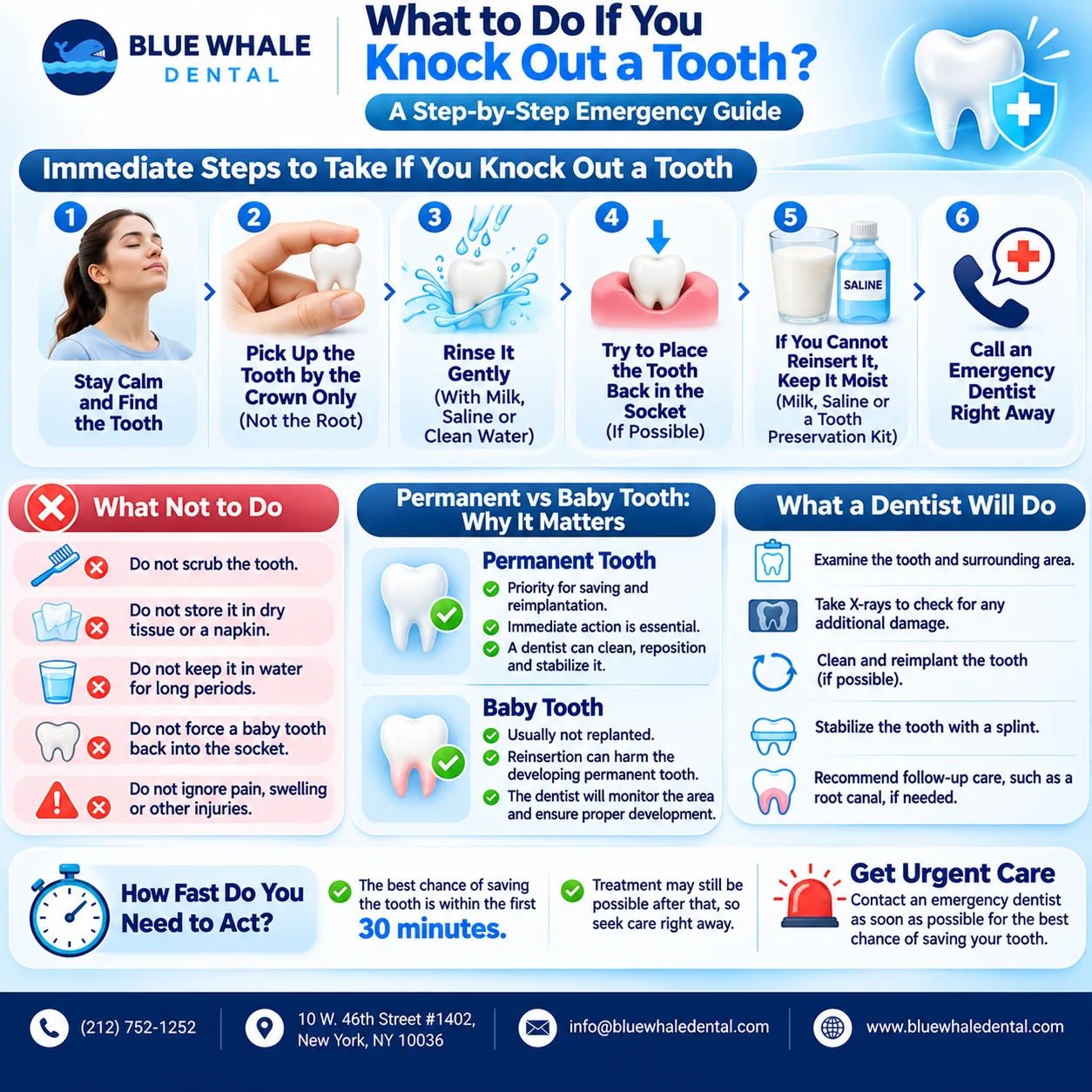
1. Stay calm and find the tooth
The first step is to locate the tooth as quickly as possible. If there is bleeding, take a moment to rinse your mouth gently with water and check the area.
2. Pick up the tooth by the crown only
Hold the tooth by the chewing surface or crown, not the root. The root contains delicate fibers that help the tooth reattach. Touching the root can reduce the chances of successful reimplantation.
3. Rinse it gently if dirty
If the tooth is visibly dirty, rinse it briefly with milk or saline. If neither is available, use clean running water for a few seconds. Do not scrub the tooth, use soap, or wrap it in tissue.
4. Try to place the tooth back in the socket if possible
If the tooth is a permanent tooth and you are able to do so, gently place it back into the socket. Bite down softly on clean gauze or a cloth to keep it in place.
This is usually the best option if the tooth can be reinserted right away. The sooner it is returned to the socket, the better the chances of successful healing.
5. If you cannot reinsert it, store it properly
If the tooth cannot be placed back into the socket, it must stay moist. The best storage options are:
- Milk
- Saline solution
- A tooth preservation kit, if available
- Inside the cheek, only if the person is alert and old enough not to swallow it
Never let the tooth dry out. Drying significantly lowers the chances of saving it.
6. Call an emergency dentist right away
You should contact an emergency dentist immediately after a tooth is knocked out. Dentists can assess the injury, clean the area, reposition the tooth if possible, and stabilize it with a splint.
If the injury happened with facial trauma, heavy bleeding, or another serious medical issue, go to the emergency room first or call emergency services.
What Not to Do After a Tooth Is Knocked Out?
A few common mistakes can make treatment less successful.
Do not scrub the tooth
Scrubbing can damage the periodontal ligament cells that may help the tooth reattach.
Do not store it in dry tissue or a napkin
Dry storage can seriously reduce the chance of saving the tooth.
Do not place the tooth in water for long periods
Plain water is better than letting it dry out, but it is not ideal for storage because it can damage the root cells.
Do not force a baby tooth back into the socket
If a baby tooth is knocked out, do not reinsert it. This could damage the developing permanent tooth underneath.
Do not ignore pain, swelling, or other injuries
A knocked out tooth may be only one part of the problem. There could also be fractures, soft tissue injuries, or jaw trauma that need prompt care.
Permanent Tooth vs Baby Tooth: Why It Matters
Whether the knocked out tooth is a permanent tooth or a baby tooth changes the recommended response.
A permanent tooth is the priority because dentists may be able to save and reimplant it. Immediate action is essential.
A baby tooth is usually not replanted. Reinserted baby teeth can harm the underlying permanent tooth. Instead, the dentist will monitor the area and make sure the developing tooth is not affected.
If you are unsure whether the tooth is permanent, an emergency dentist can help determine the best next step.
How Fast Do You Need to Act?
The best chance of success is within the first 30 minutes. That said, treatment may still be possible even if more time has passed.
Why time matters
When a tooth is out of the mouth, the cells on the root begin to die if the tooth dries out. The longer it remains dry, the harder it becomes to save.
If more than an hour has passed
A dentist may still attempt treatment, but the prognosis may be less favorable. In some cases, the tooth can still be reimplanted and stabilized, though long-term survival is less predictable.
Even if the tooth cannot be saved, prompt care can reduce pain, control bleeding, and protect the surrounding tissues.
What a Dentist Will Do?
Once you arrive at the dental office, the dentist will assess the injury and decide whether the tooth can be repositioned.
Exam and imaging
The dentist may take X-rays to check for:
- Root fractures
- Jaw fractures
- Damage to nearby teeth
- Bone injury
- Position of the tooth socket
Cleaning and reimplantation
If the tooth is suitable for reimplantation, the dentist will clean the area carefully and place the tooth back into the socket.
Splinting
The dentist may use a flexible splint to stabilize the tooth and allow the supporting tissues to heal. This splint is often temporary and may remain in place for about 1 to 2 weeks, depending on the injury.
Follow-up treatment
A knocked out permanent tooth often needs follow-up visits. In many adult cases, root canal treatment may eventually be needed because the nerve inside the tooth may not survive the trauma.
This is one reason quick dental care matters. Even if the tooth is successfully replanted, it still requires monitori
Can a Knocked Out Tooth Always Be Saved?
Not always. Several factors influence the outcome:
- How quickly the tooth was replanted
- Whether it dried out
- Whether the root was handled correctly
- The patient’s age
- The condition of the tooth and socket
- Whether there were associated fractures or severe trauma
A tooth that is replanted immediately and kept moist has a much better chance of survival than one that stays dry for a long time. Still, dentists can sometimes stabilize and preserve the tooth even when the situation is not ideal.
Pain, Bleeding, and Swelling: What Is Normal?
After a tooth is knocked out, some bleeding and soreness are expected. The gum and surrounding tissues have usually been injured as well.
To manage bleeding
Use clean gauze and apply gentle pressure. If gauze is not available, a clean cloth can help temporarily.
To reduce swelling
Apply a cold compress to the outside of the face for 10 to 15 minutes at a time.
For pain relief
An over-the-counter pain reliever may help, but avoid medications if you have medical conditions or allergies that make them unsafe. A dentist or physician can advise you if needed.
If there is heavy bleeding that does not slow down, trouble breathing, or a suspected jaw fracture, seek emergency medical attention immediately.
When to Go to the Emergency Room Instead of the Dentist?
Most knocked out teeth should be managed by a dentist as quickly as possible. However, some situations require hospital care first.
Seek emergency medical care if there is:
- Severe facial trauma
- Loss of consciousness
- Uncontrolled bleeding
- Trouble breathing or swallowing
- Suspected jaw fracture
- Head injury symptoms such as vomiting, confusion, or dizziness
Once the medical emergency is addressed, dental treatment can follow.
How Dentists May Replace a Knocked Out Tooth If It Cannot Be Saved
If a tooth cannot be reimplanted or does not survive long term, there are several replacement options.
A dental implant is often the closest option to a natural tooth in function and appearance. It requires enough healthy bone and time for healing.
A bridge can replace one missing tooth by anchoring to neighboring teeth. This is sometimes a faster option, but it may involve preparing adjacent teeth.
This is usually the most affordable temporary or long-term option, though it is not as stable or natural feeling as fixed restorations.
Space maintenance or monitoring
In younger patients, the dentist may need to preserve space and monitor jaw development before deciding on a final replacement.
Emergency Tooth Replacement Options
Option | Best For | Advantages | Limitations |
|---|---|---|---|
Reimplanting the natural tooth | Permanent tooth, immediate treatment | Preserves natural tooth and appearance | Time-sensitive, may still fail later |
Dental implant | Adults after healing | Strong, stable, long-term solution | Requires surgery and healing time |
Dental bridge | Replacing one missing tooth faster | Fixed in place, good appearance | May require altering nearby teeth |
Removable partial denture | Temporary or budget-conscious replacement | Lower initial cost, non-surgical | Less stable, not as natural feeling |
Conclusion
If you knock out a tooth, the most important thing is to act quickly and handle the tooth correctly. Pick it up by the crown, keep it moist, and get to an emergency dentist as soon as possible. For a permanent tooth, immediate reimplantation offers the best chance of saving it. For a baby tooth, the right approach is different, and professional evaluation is still essential.
Dental trauma can be frightening, but fast, informed action gives you the best possible outcome. Even if the tooth cannot be saved, timely treatment can protect your oral health and help you plan the right replacement.
Can I put a knocked out tooth back in myself?
Yes, if it is a permanent tooth and you can do it gently without forcing it. Hold it by the crown and place it back into the socket. If that is not possible, store it in milk or saline and see a dentist right away.
Should I rinse a knocked out tooth with tap water?
A brief rinse is acceptable if the tooth is dirty, but do not scrub it. Use milk or saline if available. Avoid soaking it for long periods in water.
Can a baby tooth be put back in?
No. Baby teeth should not usually be replanted because they can damage the developing permanent tooth underneath.
How long do I have to save a knocked out tooth?
The sooner the better. Ideally, treatment should happen within 30 minutes, but a dentist may still attempt to save the tooth even after that window.
What if I cannot find the tooth?
If the tooth is missing after an injury, a dentist or physician may need to check for aspiration, swallowing, or hidden fragments. Seek care promptly.
Will a knocked out tooth hurt?
There is often pain, bleeding, and soreness around the gum and socket. The tooth itself may have little sensation once fully avulsed, but the surrounding tissue can be very painful.
Why Midtown Manhattan Professionals Choose Blue Whale Dental
If you or your child has knocked out a tooth, contact Blue Whale Dental immediately for urgent guidance and emergency evaluation. Fast treatment can make a major difference. Call our office right away to speak with our team and get the care you need as soon as possible.
At Blue Whale Dental NYC, we provide advanced and personalized solutions for missing teeth, including implants, bridges, and full restorative care tailored to your needs.
Ready to book your dentist appointment in Midtown NYC Visit our clinic or schedule your appointment today with our expert dental team.
Address: 10 W. 46th Street #1402 New York, NY 10036
Email: info@bluewhaledental.com
Call Now : 212-752-1252