
Best Foods for Strong Teeth start with the everyday choices you make at mealtime. What you eat affects your teeth, gums, saliva production, and risk of cavities and gum disease. In 2026, preventive dental care remains important, and choosing nutrient-rich foods is a practical way to support stronger teeth, healthier gums, and better overall oral health.
If you are searching for the Best Foods for Strong Teeth, the answer is not just “calcium.” A balanced diet with the right combination of minerals, vitamins, protein, and water can help protect enamel, support gum tissue, and reduce the buildup of harmful bacteria. Some foods help strengthen teeth directly, while others support the body systems that keep your mouth healthy.
This guide breaks down the best foods for strong teeth and healthy gums, explains why they work, and offers realistic tips for building a tooth-friendly diet without giving up the foods you enjoy.
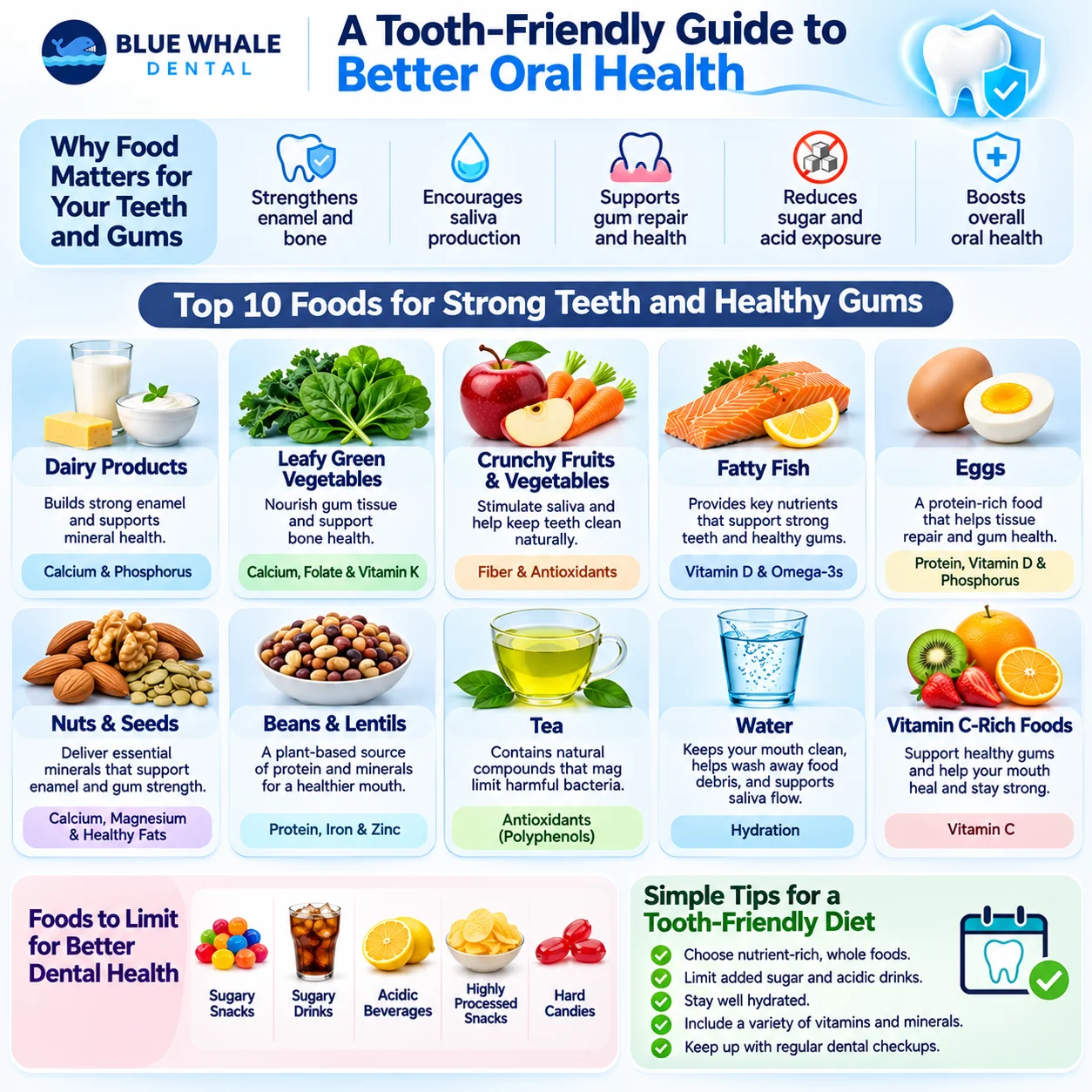
Why does food matter for teeth and gums?
Your teeth are constantly exposed to acids, bacteria, and wear from chewing. Enamel, which is the hard outer layer of the tooth, cannot regenerate once it is lost. Gum tissue also needs steady nutritional support to stay firm and healthy.
The right foods can help by:
- Supplying calcium and phosphorus to support enamel and bone
- Encouraging saliva production, which helps neutralize acids
- Providing vitamin C and other nutrients needed for gum repair
- Reducing the frequency of sugar and acid exposure
- Supporting overall immune function, which matters for gum health
On the other hand, frequent snacking on sugary or acidic foods can make it harder for your mouth to recover between meals. That is why food choices matter just as much as brushing and flossing.
Best foods for strong teeth and healthy gums
1. Dairy products:
Milk, plain yogurt, and cheese are among the most effective foods for oral health. They are rich in calcium and phosphorus, which are essential for maintaining strong teeth and supporting the minerals in enamel.
Cheese is especially helpful because it may stimulate saliva flow and help balance acids in the mouth after meals. Plain yogurt also contains protein and probiotics, which may support a healthier oral microbiome.
Best options:
- Plain Greek yogurt
- Aged cheese such as cheddar or mozzarella
- Milk, especially with meals
Treatment tradeoff: flavored yogurts often contain added sugar, which can outweigh the oral health benefits. Always choose unsweetened or low-sugar versions when possible.
2. Leafy green vegetables:
Spinach, kale, collard greens, and Swiss chard are packed with vitamins and minerals that support tooth and gum health. They provide calcium, folate, and vitamin K, all of which play a role in maintaining healthy tissues and supporting bone metabolism.
Leafy greens are also low in sugar and high in fiber, making them a smart choice for overall wellness.
How they help:
- Support gum tissue repair
- Contribute calcium without added sugar
- Add important antioxidants to the diet
If raw greens are difficult to chew, lightly steaming them can make them easier to eat while preserving many nutrients.
3. Crunchy fruits and vegetables:
Apples, carrots, celery, and cucumbers do more than provide vitamins. Their texture helps stimulate saliva and gently clean the tooth surface while you chew. Saliva is one of the body’s best natural defenses against decay because it washes away food debris and neutralizes acids.
These foods also provide fiber, which helps support digestive health and may encourage more balanced eating habits overall.
Examples:
- Apples
- Carrots
- Celery
- Bell peppers
- Cucumbers
Tradeoff to consider: apples are healthy, but they still contain natural sugars and acids. It is better to eat them with a meal rather than sip sweetened apple products throughout the day.
4. Fatty fish:
Salmon, sardines, and mackerel provide vitamin D and omega-3 fatty acids. Vitamin D is important because it helps the body absorb calcium effectively. Without enough vitamin D, even a calcium-rich diet may not fully support tooth and bone health.
Omega-3 fatty acids may also help support healthier gum tissue by reducing inflammation in the body.
Best choices:
- Salmon
- Sardines
- Tuna
- Mackerel
For patients who do not eat fish, vitamin D can also be obtained through fortified foods or supplements when recommended by a healthcare professional.
5. Eggs:
Eggs are a high-quality source of protein and contain vitamin D, phosphorus, and other important nutrients. Protein is essential for tissue repair, which matters for gums and the soft tissues in your mouth.
A protein-rich diet helps the body maintain healthy cells and supports recovery if gum tissues are inflamed or irritated.
Why eggs are helpful:
- Easy to digest
- Support tissue repair
- Offer vitamin D and phosphorus
Scrambled, boiled, or poached eggs are all excellent options, especially for those who need softer foods after dental treatment.
6. Nuts and seeds:
Almonds, sesame seeds, chia seeds, and walnuts provide minerals such as calcium, phosphorus, and magnesium. They are also a useful source of healthy fats and protein.
Almonds are especially popular for dental health because they are low in sugar and relatively rich in calcium. Sesame seeds can also help support mineral intake, especially when added to salads or yogurt.
Things to keep in mind:
- Whole nuts can be hard on sensitive teeth or recent dental restorations
- Nut butters without added sugar are often a gentler option
- Seeds are best enjoyed as part of meals rather than sticky sweet snacks
If you have crowns, bridges, or are recovering from dental work, ask your dentist whether hard nuts are appropriate for you.
7. Beans and lentils:
Beans, lentils, chickpeas, and other legumes provide protein, fiber, iron, and magnesium. These nutrients support tissue health and overall immunity, both of which are relevant to gum health.
Legumes are also a useful alternative for patients who do not consume much dairy or meat. Their fiber content can help you feel full and may reduce the urge to snack on sugary foods.
Examples:
- Lentil soup
- Chickpea salads
- Black beans
- Hummus made with minimal added sugar
8. Green and black tea:
Unsweetened tea contains compounds called polyphenols, which may help reduce the growth of bacteria associated with plaque and bad breath. Tea is not a substitute for brushing, but it can be a helpful addition to an oral-friendly routine.
Green tea in particular has been studied for its potential role in supporting gum health.
Important note:
- Tea should be unsweetened for best results
- Frequent tea drinking may stain teeth over time
- Adding lemon can increase acidity, so moderation is wise
9. Water:
Water is one of the most underrated oral health tools. It does not contain sugar or acid, helps rinse food particles from the teeth, and supports saliva production. Fluoridated water, where available, offers an added benefit because fluoride helps strengthen enamel and reduce the risk of cavities.
Why water matters:
- Keeps the mouth moist
- Supports natural cleansing
- Helps reduce dry mouth
- May provide fluoride if your local supply is fluoridated
If you have dry mouth, are taking certain medications, or breathe through your mouth at night, staying hydrated becomes even more important.
10. Citrus and vitamin C rich foods:
Oranges, strawberries, kiwi, and bell peppers are good sources of vitamin C. This vitamin is essential for healthy connective tissue and gum repair. A deficiency can lead to weakened gums, slower healing, and greater susceptibility to inflammation.
However, citrus foods are acidic, so they should be consumed thoughtfully.
Best approach:
- Eat citrus with meals rather than sipping juice
- Rinse with water afterward
- Wait before brushing if you have had acidic foods or drinks
Bell peppers and strawberries are often gentler options than citrus juice because they provide vitamin C with less acid exposure.
Foods that can weaken teeth and gums
To make the most of the Best Foods for Strong Teeth, it helps to know what to limit.
Sugary snacks and drinks:
Frequent sugar intake feeds cavity-causing bacteria. The problem is not just the amount of sugar, but how often your teeth are exposed to it.
Sticky candies:
Caramels, gummies, and dried fruit can cling to teeth and prolong acid exposure.
Acidic beverages:
Soda, sports drinks, and even some flavored sparkling waters can erode enamel over time.
Constant snacking:
Even healthy foods can become a problem if they are eaten all day long. Teeth need time to recover between meals.
Excessive alcohol:
Alcohol can contribute to dry mouth, which reduces saliva’s protective effect.
Practical ways to build a tooth-friendly diet
Healthy eating for your mouth does not have to be complicated. Small habits often make the biggest difference.
Pair smart foods together
Try combining protein, fiber, and calcium in one meal. For example:
- Yogurt with chia seeds
- Eggs with spinach
- Salmon with steamed vegetables
- Cheese with apple slices
This helps balance blood sugar and reduces the urge to snack on sugary foods.
Choose meal times over grazing
Frequent grazing keeps the mouth in a more acidic state. Eating nutritious foods at set meals gives saliva time to restore balance.
Finish meals with water
A glass of water after eating can help rinse away food particles and support saliva flow.
Be careful with healthy but sticky foods
Dates, raisins, and dried apricots are nutritious but sticky and sugary. Enjoy them in moderation and ideally with meals.
Do not rely on diet alone
Even a highly nutritious diet cannot replace brushing twice daily, flossing, and regular dental checkups.
What if you already have sensitive teeth or gum issues?
If your teeth are sensitive, hard or crunchy foods may feel uncomfortable. If your gums are inflamed, chewing certain foods can also be painful. In those cases, the best foods for strong teeth may need to be adapted to your situation.
Consider softer options such as:
- Yogurt
- Scrambled eggs
- Steamed vegetables
- Smooth nut butters
- Soups with lentils or beans
- Soft fish
If you notice bleeding gums, persistent bad breath, loose teeth, or pain when chewing, those may be signs of gum disease or another dental issue that needs professional care. Nutrition helps, but it does not replace diagnosis and treatment.
Food Group | Main Nutrients | Oral Health Benefit | Best Use |
|---|---|---|---|
Dairy | Calcium, phosphorus, protein | Supports enamel and saliva balance | With meals or as snacks |
Leafy greens | Calcium, folate, vitamin K | Supports gums and tissues | In salads, soups, or sautéed |
Crunchy produce | Fiber, water, vitamins | Stimulates saliva and helps clean teeth | As snacks or meal sides |
Fatty fish | Vitamin D, omega-3s | Supports calcium absorption and gum health | 1 to 2 times weekly |
Eggs | Protein, vitamin D | Supports tissue repair | Breakfast or soft meals |
Nuts and seeds | Calcium, magnesium, healthy fats | Mineral support for teeth and bones | In moderation, preferably unsweetened |
Beans and lentils | Protein, fiber, iron | Supports overall oral and immune health | Soups, salads, bowls |
Water | Hydration, fluoride if available | Rinses mouth and supports saliva | Throughout the day |
Conclusion
The Best Foods for Strong Teeth are the ones that provide calcium, vitamin D, phosphorus, protein, fiber, and vitamin C while keeping sugar and acid exposure low. Dairy products, leafy greens, fatty fish, eggs, nuts, beans, crunchy vegetables, and water all play a meaningful role in supporting healthier teeth and gums.
A strong smile is built through daily habits. Smart nutrition, good brushing and flossing, and regular dental visits work together to protect enamel, support gum tissue, and reduce the risk of future dental problems.
Frequently Asked Questions About Healthy Foods for Strong Teeth
What is the single best food for strong teeth?
There is no single perfect food, but cheese is often considered one of the best because it provides calcium, protein, and helps stimulate saliva. Still, the best results come from a varied diet.
Are fruits bad for teeth because of sugar?
Not necessarily. Whole fruits are generally healthy and provide important vitamins and fiber. The main concern is frequent exposure to fruit juice, dried fruit, or constant snacking on acidic or sugary foods.
Does milk really help strengthen teeth?
Yes. Milk contains calcium, phosphorus, and protein, which support enamel and overall tooth structure. Fortified milk may also provide vitamin D.
Can I improve gum health with diet alone?
Diet can support gum health, but it cannot treat gum disease on its own. If you have bleeding gums, swelling, or persistent bad breath, professional dental care is important.
Are crunchy foods always good for teeth?
Not always. Crunchy fruits and vegetables are helpful, but very hard foods like ice, hard candy, or unpopped popcorn kernels can damage teeth or dental work.
Why Midtown Manhattan Professionals Choose Blue Whale Dental
If you want personalized guidance on improving your oral health through diet, prevention, or treatment, Blue Whale Dental is here to help. Book a consultation with our team today to keep your teeth strong and your gums healthy in 2026 and beyond.
At Blue Whale Dental NYC, we provide advanced and personalized solutions for missing teeth, including implants, bridges, and full restorative care tailored to your needs.
Ready to book your dentist appointment in Midtown NYC Visit our clinic or schedule your appointment today with our expert dental team.
Address: 10 W. 46th Street #1402 New York, NY 10036
Email: info@bluewhaledental.com
Call Now : 212-752-1252