
IV Sedation Dentistry can make dental treatment far more comfortable for patients who feel anxious, have a strong gag reflex, need extensive dental work, or simply want to get through an appointment with less stress. While the procedure itself is designed to keep you relaxed, understanding what happens afterward is just as important for a safe and comfortable recovery.
Recovery after IV sedation is usually straightforward, but the sedative medication can temporarily affect your memory, coordination, alertness, and reaction time. Knowing what to expect after treatment can help you plan ahead, avoid unnecessary stress, and recover safely.
If you are considering IV Sedation Dentistry in Midtown Manhattan, this guide explains the recovery process, common side effects, aftercare instructions, recovery timeline, and when you should contact your dentist for help.
What IV Sedation Dentistry Does?
IV Sedation Dentistry uses medication delivered through a vein to help you feel calm and deeply relaxed during dental treatment. In many cases, patients remain conscious enough to respond to instructions, but they may remember very little about the procedure afterward.
This type of sedation is different from general anesthesia. You are not fully unconscious, but the medication works quickly and can be adjusted throughout the appointment to maintain the right level of relaxation.
Because the effects are stronger than nitrous oxide or oral sedation, recovery takes more planning. Most patients can go home the same day, but they need someone else to drive them and stay with them for a period of time.
How You May Feel Right After the Appointment?
The first hour or two after treatment is usually when the effects of IV sedation are most noticeable. Many patients feel sleepy, slightly foggy, or unsteady when they first wake up. This is normal and expected.
You may also experience:
- Mild grogginess
- Slower thinking
- Limited memory of the appointment
- Dry mouth
- Lightheadedness
- Slight nausea in some cases
These effects usually fade gradually as the sedative wears off. For most people, the strongest aftereffects improve within several hours, but some lingering tiredness can last the rest of the day.
If you had local anesthetic during the procedure, your mouth may still feel numb for a few hours as well. Try not to bite your cheeks, lips, or tongue while numbness is present.
The First 24 Hours After IV Sedation
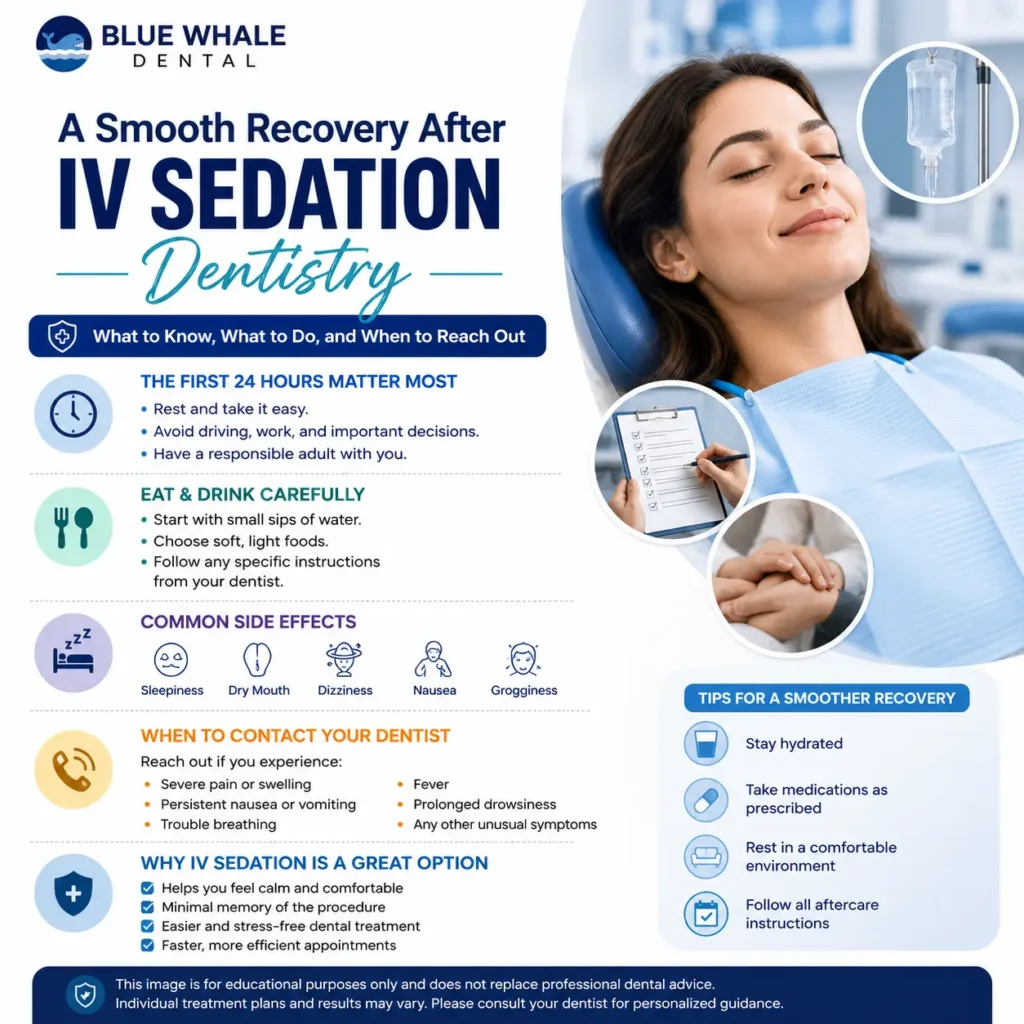
The first day after IV Sedation Dentistry is the most important part of recovery. Your body is clearing the medication, and your judgment and coordination may still be affected.
Expect to Rest
Plan to take it easy for the rest of the day. Even if you feel mostly awake, your reaction time and mental sharpness may still be reduced. Resting helps your body recover and lowers the chance of dizziness or falls.
Avoid Driving or Operating Machinery
You should not drive, use heavy machinery, make important decisions, or sign legal documents for at least 24 hours after sedation, unless your dentist gives different instructions. The medication can impair your judgment even after you feel alert.
Eat and Drink Carefully
Start with small sips of water and light foods once you are fully awake and your dentist says it is safe to eat. Good options often include:
- Yogurt
- Applesauce
- Scrambled eggs
- Soup that is not too hot
- Smoothies, if you are allowed to use a straw after your procedure
If you had extractions, implants, or gum surgery, your dentist may give you more specific dietary instructions. Always follow those directions, since some procedures require avoiding straws, hard foods, or hot beverages.
Take Prescribed Medications as Directed
If your dentist prescribed pain medication, antibiotics, or anti-inflammatory medication, use them exactly as instructed. Do not mix medications with alcohol or any non-approved sedatives. If you take daily medications for health conditions, your dentist should have already reviewed them with you before treatment.
Common Side Effects After IV Sedation Dentistry
Common and Usually Mild Side Effects
Most side effects are temporary and not serious. Still, it helps to know what is normal versus what needs attention.
- Sleepiness
- Grogginess
- Slight dizziness
- Dry mouth
- Temporary forgetfulness
- Mild headache
- Nausea
- Chills or feeling cold
These symptoms usually resolve on their own with rest, hydration, and time.
Less Common Concerns
In some cases, patients may notice:
- Prolonged drowsiness
- More noticeable nausea
- Trouble standing without feeling lightheaded
- A sore throat if a breathing device was used
- Bruising or mild tenderness at the IV site
A small bruise at the IV insertion site can happen and usually goes away within a few days. If side effects seem severe, get worse instead of better, or last longer than expected, contact your dental team.
What Recovery Feels Like Based on the Procedure
Recovery after IV Sedation Dentistry also depends on what dental treatment was performed. The sedation itself may wear off within hours, but the procedure can influence soreness, swelling, and dietary restrictions.
After a Simple Procedure
If you had a cleaning, filling, crown placement, or similar treatment, recovery may be quick. Most patients feel back to normal by the next day, aside from a little grogginess or soreness.
After Extractions or Oral Surgery
If you had tooth extractions, implants, or periodontal treatment, you may have more swelling, tenderness, and bleeding than someone who had a routine procedure. In these cases, sedation recovery and surgical recovery overlap.
Expect:
- Mild to moderate soreness
- Swelling for 24 to 72 hours
- Need for soft foods
- More careful oral hygiene instructions
- Possible prescription pain management
Your dentist may recommend ice packs, saltwater rinses after the first day, and avoiding strenuous activity for a few days.
Helpful Aftercare Tips for a Smooth Recovery
The best recovery starts with preparation. If you know what to do after IV sedation, you can reduce discomfort and avoid complications.
Have a Responsible Adult Drive You Home
This is one of the most important safety requirements. You should not be alone immediately after sedation, and you should not drive yourself home. A trusted adult should escort you and stay available until you are steady.
Rest in a Safe, Comfortable Place
Choose a calm environment where you can lie down and rest without interruptions. Midtown Manhattan life can be fast-paced, so it helps to plan recovery time before your appointment rather than trying to resume your schedule right away.
Stay Hydrated
Sip water slowly once you are awake enough to drink safely. Hydration can help with dry mouth and support recovery, but avoid drinking too quickly if you feel nauseated.
Follow Oral Care Instructions
Your dentist may give specific guidance depending on the procedure. You may need to avoid brushing a treated area for a short time or rinse gently instead of swishing forcefully.
Avoid Alcohol and Smoking
Alcohol can interact with sedation medications and pain relievers. Smoking can slow healing, especially after extractions or surgery. It is best to avoid both until your dentist says it is safe.
Wear Loose, Comfortable Clothing
If you are preparing for future IV Sedation Dentistry, wear something comfortable and easy to remove. This makes the appointment simpler and helps you feel less restricted afterward.
What Not to Do After IV Sedation?
Some restrictions are easy to overlook because you may feel better than you actually are. Even if the procedure went smoothly, the sedative can still affect your body and mind.
Avoid the following for at least 24 hours unless your dentist gives different directions:
- Driving
- Drinking alcohol
- Taking recreational drugs
- Making major financial or legal decisions
- Exercising intensely
- Going back to work too soon if your job requires focus, lifting, or safety-sensitive tasks
- Being alone if you still feel dizzy or weak
This is especially important if you had more than one medication or a longer procedure.
How Long Does IV Sedation Dentistry Recovery Take
Most of the sedative effect wears off within several hours, but full recovery can vary.
- Here is a general timeline:
- First few hours: Sleepiness, grogginess, and some memory gaps are common
- Same day: Rest is usually recommended, and coordination may still be affected
- Next day: Many patients feel mostly back to normal
- 24 to 48 hours: Any lingering fatigue or soreness should continue to improve
If your procedure involves surgery or multiple treatments, healing may take longer even after the sedation wears off.
Tradeoffs to Consider Before Choosing IV Sedation Dentistry
IV sedation offers real benefits, especially for anxious patients, but it also comes with practical tradeoffs worth understanding.
| Benefits | Tradeoffs |
|---|---|
| Strong anxiety relief | You need a driver and recovery support |
| Faster, more comfortable treatment | Temporary grogginess can affect the rest of your day |
| Less awareness of the procedure | It is not ideal if you need to return to work immediately |
| Often little to no memory of the appointment | There are added safety screenings and preparation steps |
| Helpful for patients with severe dental fear or sensitive gag reflexes | It may cost more than other sedation options |
For many patients, the comfort and ease of treatment outweigh the inconvenience of recovery. Your dentist can help determine whether IV sedation is the right choice based on your health history and treatment needs.
When to Call Your Dentist?
Mild soreness and drowsiness are expected, but some symptoms should not be ignored.
Contact your dentist if you experience:
- Severe or worsening pain
- Heavy bleeding that does not slow down
- Persistent vomiting
- Difficulty breathing
- Chest pain
- Swelling that becomes severe or spreads rapidly
- It is Fever to experience:
- Signs of infection, such as foul taste, pus, or increasing redness
- Dizziness that does not improve
- Any reaction that worries you
If something feels off, it is always better to call. Dental teams would rather reassure you early than wait until a small issue becomes a bigger one.
Who May Need Extra Precautions?
Some patients need additional review before and after IV Sedation Dentistry. This may include people with:
- Sleep apnea
- Heart or lung disease
- Liver or kidney conditions
- Pregnancy
- A history of adverse reactions to sedation
- Certain medication interactions
- Obesity or breathing concerns
Your dentist should review your medical history carefully before treatment. If you see a Midtown Manhattan dentist offering sedation, make sure the practice discusses your full health background and gives you clear aftercare instructions.
| Sedation Option | How It Feels | Recovery Time | Best For | Main Tradeoff |
|---|---|---|---|---|
| Nitrous oxide | Light relaxation | Minutes to hours | Mild anxiety, shorter visits | Less powerful for high anxiety |
| Oral sedation | Moderate relaxation and drowsiness | Several hours to next day | Patients who want an easier appointment without IV placement | Less precise dosing |
| IV Sedation Dentistry | Deep relaxation with adjustable dosing | Several hours to 24 hours or more | Severe anxiety, longer procedures, complex treatment | Requires escort and more recovery time |
Conclusion
IV Sedation Dentistry is a highly effective way to make dental care more comfortable for patients who struggle with fear, sensitivity, or complex treatment needs. The recovery period is usually manageable, but it does require planning and a few important precautions.
Most patients feel groggy at first, then gradually return to normal over several hours. By resting, staying hydrated, following instructions, and avoiding driving or alcohol, you can support a safe and smooth recovery.
If you are considering sedation dentistry, it helps to know what to expect before your visit so you can feel calm and prepared on treatment day.
Frequently Asked Questions About Sedation Dentistry
How long will I be sleepy after IV Sedation Dentistry?
Most patients feel drowsy or tired for several hours after IV sedation. The effects can continue for up to 24 hours, so you should rest and avoid driving, operating machinery, or making important decisions during this period.
Can I go back to work after IV sedation?
It is generally recommended that you do not return to work on the day of IV sedation. Sedation can affect alertness, judgment, coordination, and concentration even when you feel awake. Follow your dentist's specific instructions about when it is safe to resume work.
Is it normal to not remember my dental appointment after IV sedation?
Yes. Temporary memory loss or remembering very little of the procedure can occur after IV sedation. This is a known effect of some sedative medications and does not necessarily mean something went wrong.
Can I eat after IV sedation dentistry?
Yes, but follow your dentist's specific post-sedation and post-treatment instructions. Once you are fully awake and able to swallow normally, you can generally begin with fluids and light foods. If your mouth is still numb or sore, avoid very hot, hard, or crunchy foods to reduce the risk of injury.
What should I do if I feel nauseous after IV sedation?
Mild nausea or dizziness can occur after sedation and often improves with rest and time. Drink fluids as directed and follow the aftercare instructions provided by your dental team. If vomiting is severe, persistent, or you have other concerning symptoms, contact your dentist or seek appropriate medical advice.
Do I need someone to stay with me after IV sedation?
Yes. You should arrange for a responsible adult to take you home and stay with you during the required recovery period. Many IV sedation protocols recommend having an adult remain with you for up to 24 hours because sedation can continue to affect judgment and coordination after you leave the dental office.
Why Midtown Manhattan Professionals Choose Blue Whale Dental
If you are looking for a trusted dental team in Midtown Manhattan and want to learn whether IV Sedation Dentistry is right for you, contact Blue Whale Dental today. Our team can walk you through the process, explain your recovery plan, and help you feel confident about every step of your care.
At Blue Whale Dental NYC, we provide advanced and personalized solutions for missing teeth, including implants, bridges, and full restorative care tailored to your needs.
Ready to book your dentist appointment in Midtown NYC Visit our clinic or schedule your appointment today with our expert dental team.
Address: 10 W. 46th Street #1402 New York, NY 10036
Email: info@bluewhaledental.com
Call Now : 212-752-1252