
Gum disease is one of the most common oral health problems, but it often begins quietly. In the early stages, it may not cause pain, which is one reason many people do not realize anything is wrong until the condition has already progressed. The good news is that gum disease is often preventable with the right habits and regular dental care.
If you want to protect your smile for the long term, the best approach is to prevent gum disease before inflammation and infection have the chance to take hold. That means understanding what causes it, recognizing the early warning signs, and building a routine that supports healthy gums every day.
In this guide, we will explain what gum disease is, how it starts, and the most effective ways to keep your gums healthy before problems develop.
What Is Gum Disease?
Gum disease, also called periodontal disease, is an infection of the tissues that support your teeth. It usually begins as gingivitis, the earliest and most reversible stage. Gingivitis happens when plaque, a sticky film of bacteria, builds up along the gumline and causes inflammation.
When gingivitis is not treated, it can progress to periodontitis. At that point, the infection starts damaging the deeper structures that hold teeth in place, including the bone. This can eventually lead to loose teeth or tooth loss.
The best time to act is before gum disease becomes advanced. That is why prevention matters so much.
Why Gum Disease Starts in the First Place?
To prevent gum disease effectively, it helps to understand what causes it. The main trigger is plaque buildup. When plaque is not removed thoroughly, bacteria irritate the gums and cause inflammation.
Several factors can increase your risk, including:
- Inconsistent brushing or flossing
- Smoking or tobacco use
- Dry mouth
- Hormonal changes
- Diabetes
- Certain medications
- Poorly fitting dental restorations
- Genetics
- A diet high in sugar and processed foods
Some people are more prone to gum problems than others, even with good hygiene. That is why a proactive routine and regular dental visits are so important.
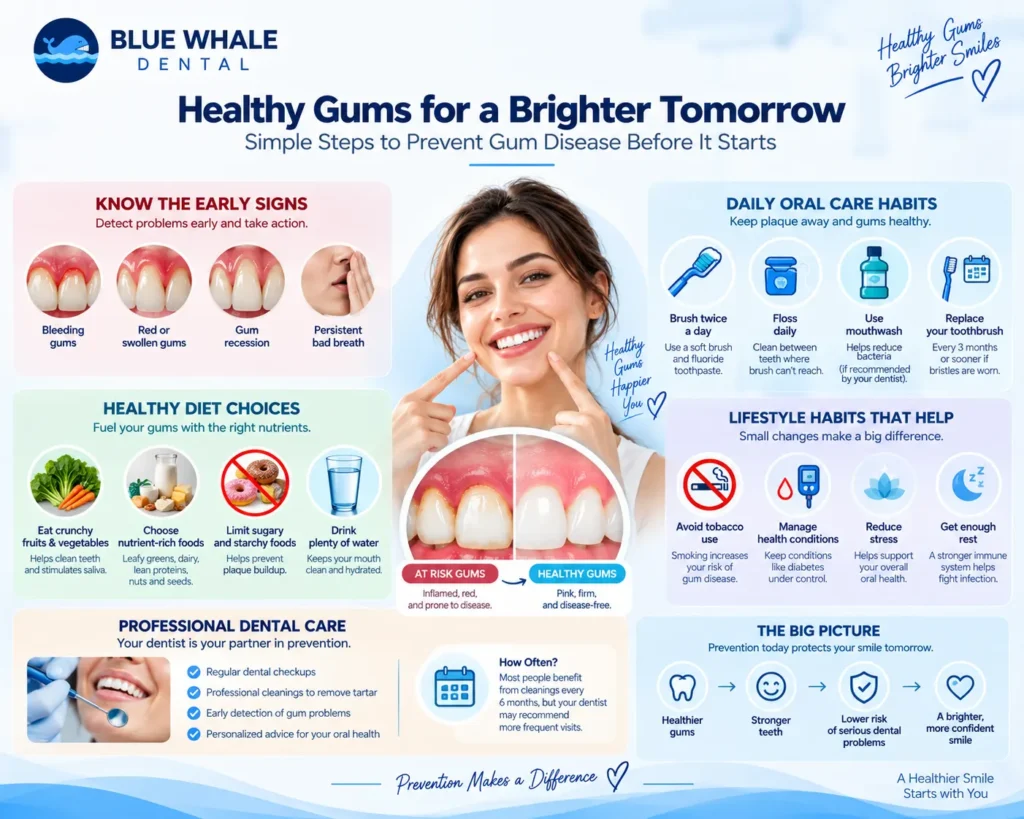
Daily Habits That Help to Prevent Gum Disease:
Brush Twice a Day with the Right Technique
Brushing is one of the most important steps in keeping your gums healthy. However, how you brush matters just as much as how often you brush.
Use a soft-bristled toothbrush and fluoride toothpaste. Brush for two minutes, twice a day, and pay close attention to the gumline. Gentle circular motions are usually more effective than aggressive scrubbing.
Brushing too hard can irritate the gums and wear down enamel. A soft touch is better for long-term oral health.
Floss Once a Day
Flossing removes plaque and food particles from between the teeth, where a toothbrush cannot always reach. This is especially important for preventing inflammation in the spaces where gum disease often begins.
If traditional floss is difficult to use, interdental brushes or water flossers may be helpful alternatives. The best option is the one you will use consistently.
Use an Antibacterial Mouth Rinse if Recommended
A mouth rinse can support gum health by reducing bacteria and helping control plaque. Some rinses are designed for everyday use, while others are medicated and intended for short-term use under a dentist’s guidance.
A rinse should never replace brushing and flossing, but it can be a useful addition to your routine.
Replace Your Toothbrush Regularly
A worn toothbrush is less effective at removing plaque. Replace your toothbrush or electric brush head about every three months, or sooner if the bristles are frayed.
This simple habit can make a real difference in plaque removal and gum health.
The Role of Professional Dental Cleanings
Even with excellent home care, plaque can harden into tartar. Once tartar forms, it cannot be removed by brushing alone. Professional dental cleanings are necessary to remove these deposits and help prevent gum inflammation.
Regular checkups also allow your dentist to look for early signs of gingivitis before they become more serious. For many patients, this is the most important part of gum disease prevention.
How Often Should You Get Cleanings?
Most people benefit from cleanings every six months. Some patients, especially those with a higher risk of gum disease, may need more frequent visits.
Your dentist will recommend a schedule based on your oral health, risk factors, and history.
Diet and Lifestyle Choices That Support Healthy Gums
Choose Foods That Help Clean and Strengthen Teeth
A balanced diet supports your body’s ability to fight inflammation and maintain healthy tissues. Foods that are rich in vitamins and minerals can help protect your gums.
Good choices include:
- Leafy greens
- Crunchy fruits and vegetables
- Dairy products
- Lean proteins
- Nuts and seeds
- Water
Crunchy foods like apples and carrots can help clean the teeth naturally and stimulate saliva, which helps wash away bacteria.
Limit Sugary and Starchy Foods
Sugar feeds harmful bacteria in the mouth. Frequent snacking on sweets, crackers, chips, and sugary drinks can increase plaque buildup and raise your risk of gum problems.
You do not have to eliminate these foods completely, but limiting how often you consume them can help protect your gums.
Quit Smoking or Using Tobacco
Tobacco use is one of the strongest risk factors for gum disease. It reduces blood flow to the gums, weakens your immune response, and can make it harder to detect early inflammation because smoking may mask symptoms like bleeding.
If you are trying to prevent gum disease, quitting tobacco is one of the best decisions you can make for your oral and overall health.
Stay Hydrated
Saliva is one of the body’s natural defenses against bacteria. It helps wash away food particles and neutralize acids. Drinking enough water throughout the day supports saliva production and helps reduce dry mouth.
Early Warning Signs to Watch For
Gum disease often starts without pain, so it is important to notice subtle changes. Contact your dentist if you experience:
- Red or swollen gums
- Bleeding when brushing or flossing
- Persistent bad breath
- Gum tenderness
- Receding gums
- Teeth that feel slightly loose
- Changes in the way your bite feels
These signs do not always mean you have advanced gum disease, but they do indicate that your gums need attention.
How Your Dental Team Helps Prevent Gum Disease?
A dentist does more than clean your teeth. They can assess your risk for gum disease, identify inflammation early, and recommend the right preventive steps for your needs.
Depending on your situation, your dentist may suggest:
- More frequent cleanings
- Improved home care techniques
- Prescription mouth rinse
- Deep cleaning if early gum disease is present
- Monitoring of gum pocket depths
- Treatment for dry mouth or contributing health conditions
This personalized approach is important because gum health is not one size fits all.
Preventive Care vs Treating Gum Disease Later
The advantages of prevention are clear. Treating gum disease later can be more complex, more expensive, and sometimes less predictable than preventing it in the first place.
Approach | Benefits | Tradeoffs |
|---|---|---|
Helps stop gum disease before it starts, usually simpler and less costly, supports long term oral health | Requires consistency and regular dental visits | |
Can reverse gingivitis and reduce inflammation | May require more focused home care and closer monitoring | |
Can slow disease progression and preserve teeth | More time intensive, may involve deep cleaning, medication, or surgery |
The takeaway is straightforward. When you prevent gum disease early, you reduce the chance of needing more involved treatment later.
Practical Tips for Building a Gum Healthy Routine
A good oral hygiene routine should be realistic. It is better to follow a simple routine consistently than to aim for perfection and burn out.
Here is a practical daily plan:
Morning:
- Brush for two minutes with fluoride toothpaste
- Clean between teeth if possible
- Rinse with water after breakfast if needed
Evening:
- Brush thoroughly before bed
- Floss or use interdental cleaning
- Use mouth rinse if recommended by your dentist
During the Day:
- Drink water regularly
- Limit frequent snacking
- Avoid tobacco
- Chew sugar-free gum if your dentist says it is appropriate, especially if you struggle with dry mouth
Consistency is what protects gum health over time.
Special Considerations for Higher Risk Patients
Some people need extra attention to prevent gum disease. This includes patients with diabetes, pregnancy-related gum sensitivity, orthodontic appliances, implants, a history of periodontal disease, or dry mouth.
If you fall into one of these groups, your dentist may recommend more frequent maintenance visits or specific home care products.
For example, people with braces may need special cleaning tools to remove plaque around brackets and wires. People with diabetes may need tighter control of blood sugar because elevated glucose can increase gum inflammation and slow healing.
The right prevention plan should match your medical and dental history.
What Happens If Gingivitis Is Ignored?
Gingivitis is reversible in many cases, but only if it is addressed early. If plaque and tartar continue to irritate the gums, the inflammation can spread below the gumline.
At that stage, pockets may form around the teeth, trapping bacteria and making it harder to clean effectively. Over time, the supporting bone may begin to break down.
This is why waiting for pain is not a good strategy. Gum disease can become serious before it feels serious.
Conclusion
The best way to protect your smile is to prevent gum disease before it begins. That starts with daily brushing and flossing, a healthy diet, regular professional cleanings, and attention to early warning signs. Small habits, done consistently, can make a major difference in your long term oral health.
If you stay proactive, you give your gums the best chance to stay strong, comfortable, and disease free.
Frequently Asked Questions About Gum Disease
Can gum disease be prevented completely?
In many cases, yes, especially when good oral hygiene and regular dental visits are maintained. However, some people have higher risk factors that make them more vulnerable. The key is early and consistent care.
How do I know if I already have gingivitis?
Common signs include red, swollen, or bleeding gums. You may also notice bad breath or gum tenderness. A dental exam is the best way to confirm whether gingivitis is present.
Is flossing really necessary?
Yes. Flossing helps clean between the teeth and under the gumline where a toothbrush cannot always reach. This is one of the most effective ways to prevent plaque buildup and gum inflammation.
Can mouthwash replace brushing and flossing?
No. Mouthwash can support your routine, but it does not remove plaque as effectively as brushing and flossing. It should be used as an added step, not a replacement.
How often should I see the dentist to keep my gums healthy?
Most people should have dental checkups and cleanings every six months, but some patients need more frequent visits based on their risk level and gum health.
Does gum disease always cause pain?
No. Gum disease often develops quietly and may not hurt at first. That is why regular dental exams are so important.
Why Midtown Manhattan Professionals Choose Blue Whale Dental?
If you are due for a checkup or want personalized advice on how to prevent gum disease, schedule a visit with Blue Whale Dental. Our team can assess your gum health, clean away buildup, and help you build a prevention plan that fits your needs.
At Blue Whale Dental NYC, we provide advanced and personalized solutions for missing teeth, including implants, bridges, and full restorative care tailored to your needs.
Ready to book your dentist appointment in Midtown NYC Visit our clinic or schedule your appointment today with our expert dental team.
Address: 10 W. 46th Street #1402 New York, NY 10036
Email: info@bluewhaledental.com
Call Now : 212-752-1252