
Tooth pain can range from a mild ache to severe, throbbing discomfort that makes it hard to eat, sleep, or concentrate. Some toothaches are caused by minor issues such as sensitivity or trapped food, while others point to a more serious problem that needs immediate dental care.
Knowing when tooth pain is a dental emergency can help you avoid complications and get relief sooner. In some cases, waiting too long can allow an infection to spread, worsen damage to the tooth, or increase the risk of needing more complex treatment later.
This guide explains the warning signs of a true dental emergency, what may be causing the pain, and what to do before you can see a dentist.
What counts as a dental emergency?
A dental emergency is any oral health problem that needs prompt attention to stop severe pain, control bleeding, save a tooth, or prevent infection from spreading. Not every toothache is an emergency, but some symptoms should never be ignored.
A Tooth Pain Dental Emergency usually involves one or more of the following:
- Severe or worsening pain
- Swelling in the face, jaw, or gums
- Fever or signs of infection
- A broken, cracked, or knocked out tooth
- Bleeding that does not stop
- Pain that makes it difficult to swallow, open your mouth, or breathe
If your symptoms are intense or getting worse quickly, you should contact a dentist right away.
Common causes of severe tooth pain
Tooth pain can come from many different conditions. Some are straightforward, while others need urgent treatment.
Tooth decay:
A cavity may start as a small area of decay, but if it reaches the inner layers of the tooth, it can cause significant pain. As decay progresses, the nerve becomes irritated or infected.
Dental infection or abscess:
A tooth abscess is a pocket of infection caused by bacteria. It may form at the root of the tooth or in the gum tissue. This often causes severe throbbing pain, swelling, and tenderness.
Cracked or fractured tooth:
A crack in the tooth can expose sensitive inner structures. Pain may be sharp when chewing or when the tooth is exposed to hot or cold temperatures.
Gum disease:
Advanced gum disease can cause gum recession, loose teeth, and deep infection around the roots. While early gum disease may not be painful, advanced cases can become serious.
Impacted tooth:
Wisdom teeth or other impacted teeth can cause pressure, inflammation, and pain, especially if they are trapped beneath the gums or pressing against nearby teeth.
Dental trauma:
A fall, sports injury, car accident, or bite on something hard can crack, loosen, or dislodge a tooth. Trauma-related tooth pain should be taken seriously, even if the pain seems manageable at first.
When tooth pain is a dental emergency?
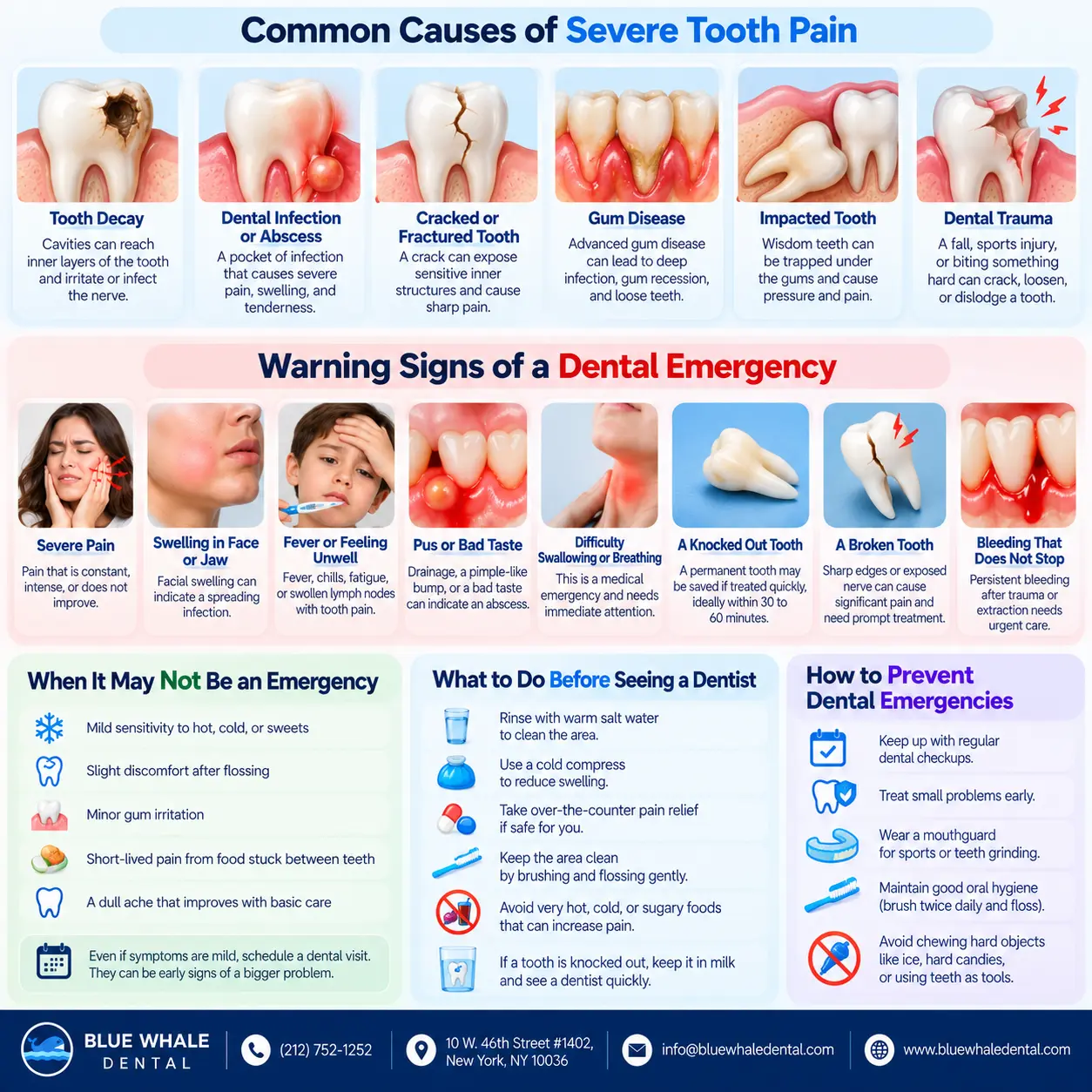
Not every toothache requires immediate emergency treatment, but certain signs mean you should call a dentist as soon as possible.
Severe pain that does not improve
If over-the-counter pain medication does not help, or if the pain is constant and intense, you may be dealing with advanced decay, inflammation, or infection.
Swelling in the face or jaw
Facial swelling is a major warning sign. It can indicate that infection is spreading beyond the tooth. This should be evaluated promptly.
Fever or feeling unwell
A fever along with tooth pain may mean the body is fighting an infection. If you also notice fatigue, chills, or swollen lymph nodes, seek urgent dental care.
Pus or a bad taste in the mouth
Drainage from the gums, a pimple-like bump near the tooth, or a bad taste can indicate an abscess.
Difficulty swallowing or breathing
This is a medical emergency. If swelling is affecting your ability to swallow, speak, or breathe, seek emergency medical attention right away.
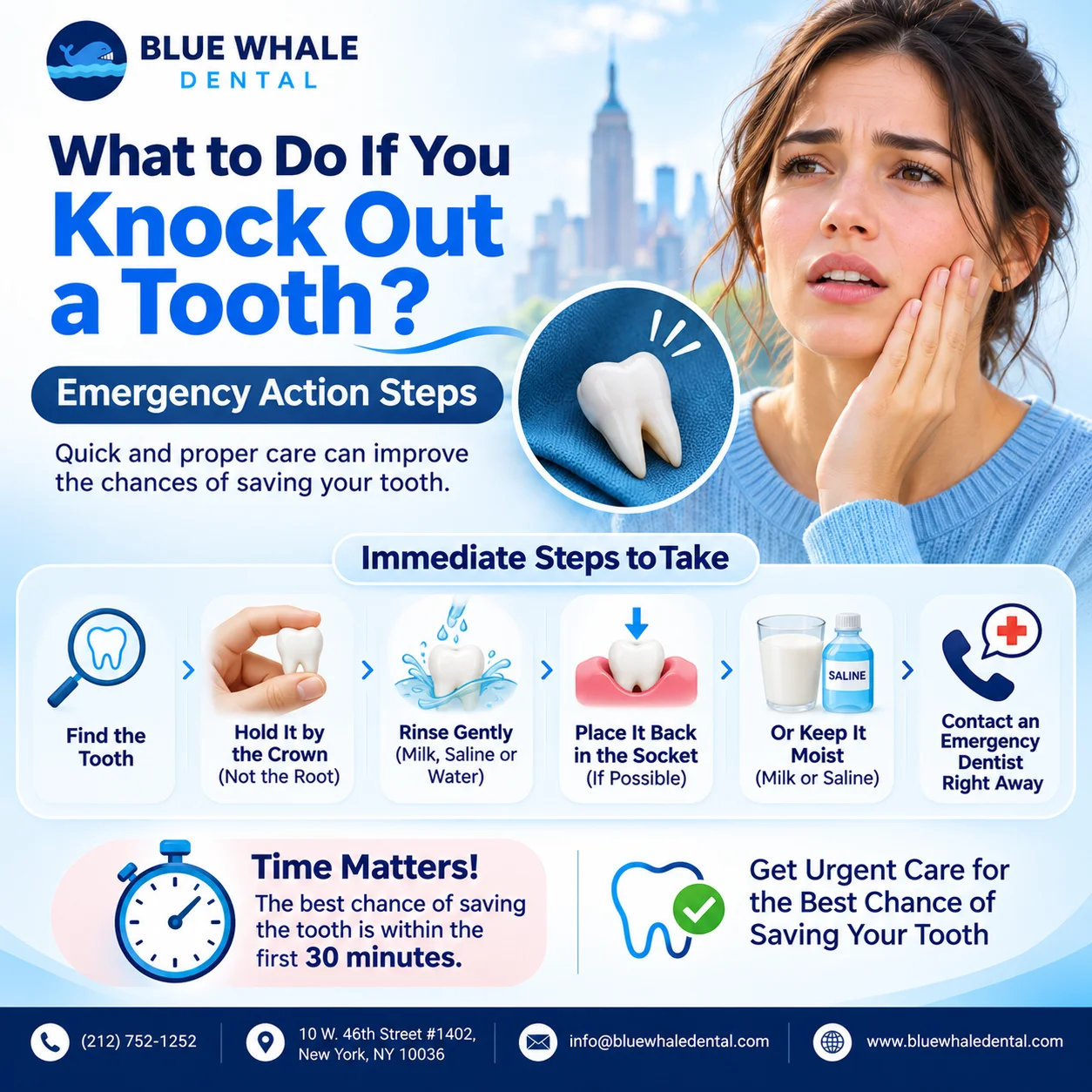
A knocked out tooth
A permanent tooth that has been completely knocked out may be saved if treated quickly, often within 30 to 60 minutes.
A broken tooth with sharp edges or exposed nerve
A fractured tooth can become painful quickly, especially if the inner tissue is exposed. Prompt treatment can reduce pain and lower the risk of further damage.
Bleeding that will not stop
Persistent bleeding after trauma or extraction needs urgent evaluation.
When tooth pain may not be an emergency?
Some toothaches can wait for a regular dental appointment, especially if the symptoms are mild and temporary.
Examples include:
- Mild sensitivity to hot, cold, or sweets
- Slight discomfort after flossing
- Minor gum irritation
- Short-lived pain from food stuck between teeth
- A dull ache that improves with basic care and does not worsen
Even if the pain is not an emergency, it is still important to schedule a dental visit. Mild symptoms can be the early sign of a cavity, crack, or gum problem that may get worse over time.
What to do before seeing a dentist?
If you are dealing with a possible Tooth Pain Dental Emergency, there are a few steps you can take to stay safe and reduce discomfort.
Rinse with warm salt water
A gentle saltwater rinse can help clean the area and may reduce irritation. Mix half a teaspoon of salt into a glass of warm water.
Use a cold compress
Apply a cold pack to the outside of the cheek for 15 to 20 minutes at a time. This can help with swelling and pain.
Take over-the-counter pain relief
Ibuprofen or acetaminophen may help with discomfort if you can take them safely. Always follow the label instructions and avoid placing pain medication directly on the gums or tooth.
Keep the area clean
Carefully brush and floss around the painful area if possible. Food trapped between teeth can sometimes make pain worse.
Avoid very hot, cold, or sugary foods
These can intensify sensitivity and irritation.
If a tooth is knocked out, handle it carefully
Pick it up by the crown, not the root. If it is dirty, rinse it briefly with water. If possible, place it back in the socket. If not, keep it in milk or saliva and get to a dentist quickly.
What a dentist may do for emergency tooth pain?
The right treatment depends on the cause of the pain. Emergency care is focused on relieving symptoms and protecting the tooth or surrounding tissue.
Exam and imaging
Your dentist will likely examine the tooth and may take X-rays to check for decay, infection, fracture, or bone involvement.
Filling or bonding
If the pain comes from a cavity or small fracture, a filling or dental bonding may be enough to restore the tooth.
Root canal treatment
If the nerve inside the tooth is inflamed or infected, root canal therapy may be needed to remove the damaged tissue and save the tooth.
Drainage and antibiotics
If there is an abscess, the dentist may drain the infection. Antibiotics may be prescribed in some cases, but they are not a substitute for treating the source of the infection.
Extraction
If the tooth is too damaged to save, extraction may be the best option. This can stop pain and prevent the infection from spreading.
Temporary stabilization
For broken teeth or trauma, the dentist may smooth sharp edges, place a temporary restoration, or stabilize the tooth until a final treatment can be completed.
Treatment tradeoffs to consider
Emergency dental care often involves decisions that balance speed, cost, long-term function, and tooth preservation.
Saving the tooth versus removing it
Whenever possible, preserving a natural tooth is preferred. However, if infection or damage is severe, extraction may provide the safest and most predictable outcome.
Root canal versus extraction
A root canal can save the tooth and maintain your bite, but it may require more time and a restoration afterward. Extraction may be faster and less expensive upfront, but it creates a gap that may need replacement later with an implant, bridge, or partial denture.
Immediate relief versus complete treatment
Some emergency visits focus on pain control first, followed by a second appointment for definitive treatment. This can be helpful if swelling, infection, or damage makes immediate full treatment difficult.
Situation | Likely urgency | What it may mean | Suggested next step |
|---|---|---|---|
Mild sensitivity to cold or sweets | Low | Early cavity or enamel wear | Schedule a routine dental visit |
Dull toothache that comes and goes | Moderate | Decay, clenching, or gum irritation | Book an appointment soon |
Severe throbbing pain | High | Infection, deep decay, or nerve involvement | Contact an emergency dentist |
Facial swelling or fever | High | Possible spreading infection | Seek urgent dental care |
Knocked out permanent tooth | Critical | Tooth may be saved if treated quickly | See a dentist immediately |
Difficulty swallowing or breathing | Critical | Potentially dangerous infection spread | Seek emergency medical help now |
Not all emergencies can be prevented, but good habits lower your risk.
Keep up with regular dental checkups
Routine exams can identify cavities, cracks, and gum disease before they become painful emergencies.
Treat small problems early
A small cavity or chipped tooth is much easier to fix than a tooth with nerve damage or infection.
Wear a mouthguard
If you play contact sports or grind your teeth at night, a mouthguard can protect against trauma and wear.
Maintain good oral hygiene
Brush twice a day with fluoride toothpaste and floss daily to reduce plaque buildup and decay.
Avoid chewing hard objects
Ice, hard candies, and using your teeth as tools can lead to cracks and fractures.
Conclusion
Tooth pain is not something to ignore, especially when it is severe, persistent, or accompanied by swelling, fever, or trauma. A Tooth Pain Dental Emergency can signal infection, nerve damage, or structural injury that needs prompt attention.
The sooner you get evaluated, the better the chances of relieving pain and preventing complications. Even if the issue turns out not to be an emergency, timely care can protect your tooth and save you from more extensive treatment later.
Frequently Asked Questions About Tooth Pain
Is tooth pain always a dental emergency?
No. Mild tooth pain is not always an emergency. However, severe pain, swelling, fever, or trauma should be treated urgently.
Can a tooth infection go away on its own?
No. A tooth infection may temporarily calm down, but the source usually remains. Without treatment, it can spread and become more serious.
When should I go to the ER instead of the dentist?
Go to the emergency room if you have difficulty breathing, swallowing, or if facial swelling is severe and spreading quickly.
Will antibiotics fix tooth pain?
Antibiotics may help control infection in some cases, but they do not fix the underlying dental problem. You still need dental treatment.
What is the fastest way to relieve tooth pain at home?
A cold compress, saltwater rinse, and over-the-counter pain relievers may help temporarily. These are only short-term measures until you see a dentist.
Can I wait until morning if my tooth hurts at night?
If the pain is mild and there is no swelling, fever, or trauma, you may be able to wait until morning and call for a dental appointment. If the pain is severe or symptoms worsen, seek urgent help.
Why Midtown Manhattan Professionals Choose Blue Whale Dental
If you are dealing with tooth pain and are unsure whether it is an emergency, contact Blue Whale Dental as soon as possible. Our team can evaluate your symptoms, recommend the right treatment, and help you find relief before the problem gets worse.
At Blue Whale Dental NYC, we provide advanced and personalized solutions for missing teeth, including implants, bridges, and full restorative care tailored to your needs.
Ready to book your dentist appointment in Midtown NYC Visit our clinic or schedule your appointment today with our expert dental team.
Address: 10 W. 46th Street #1402 New York, NY 10036
Email: info@bluewhaledental.com
Call Now : 212-752-1252