
Many parents assume baby teeth are just temporary and do not need much attention because they will eventually fall out. But the truth is that baby teeth matter far more than most people realize. These small teeth play a major role in a child’s ability to chew, speak, smile, and develop properly. They also help guide permanent teeth into the right position.
When baby teeth are neglected, the effects can go beyond a simple cavity. Tooth pain, infection, early tooth loss, and problems with alignment can affect a child’s comfort and long term oral health. Good habits and timely dental care during the early years can make a significant difference.
Understanding why baby teeth matter helps parents make better decisions about daily care, dental visits, and treatment options when problems arise.
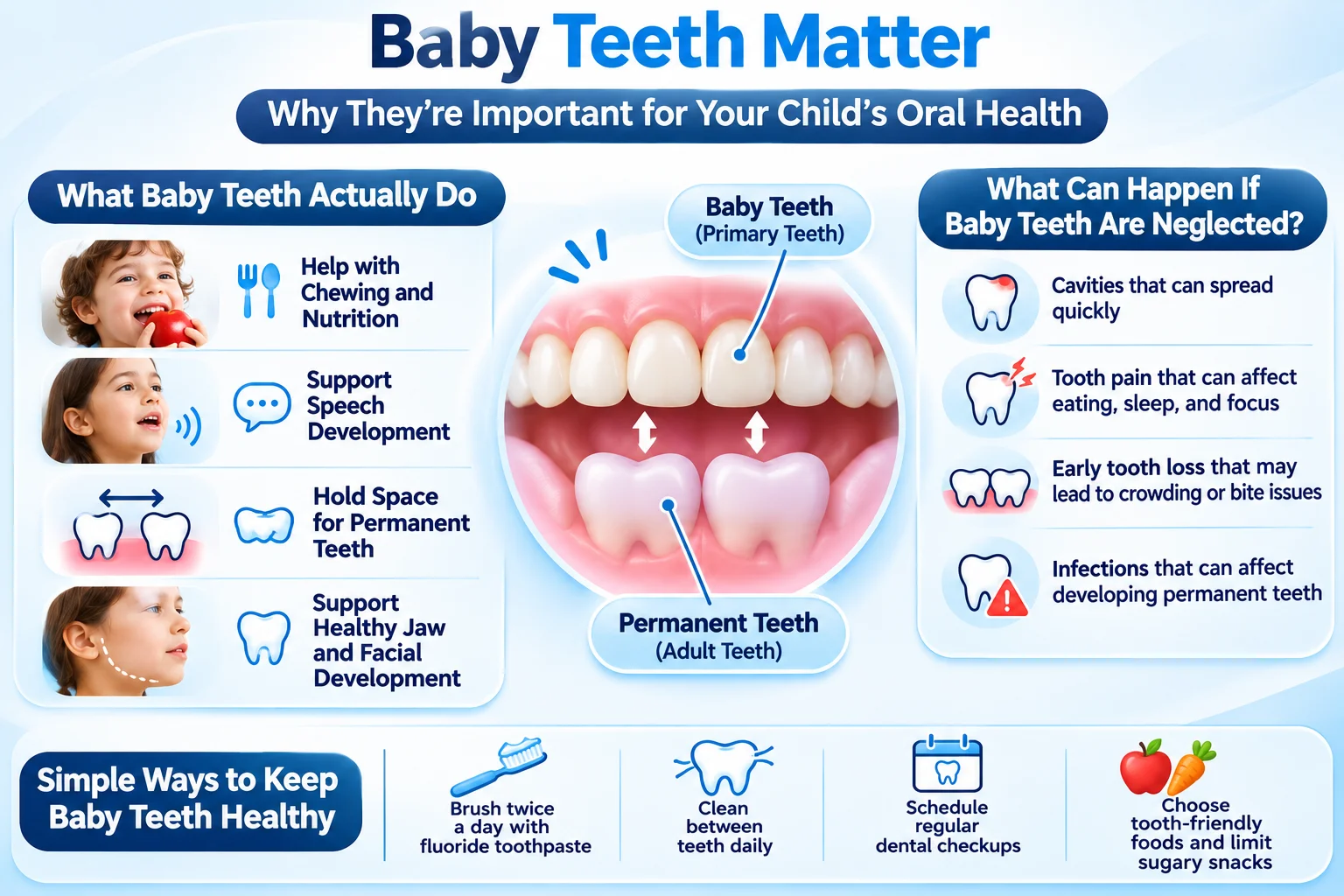
What Baby Teeth Actually Do?
Primary teeth, also called baby teeth, begin appearing around six months of age and usually remain in place until a child is about 6 to 12 years old. Although they are temporary, they are not unimportant. Each one serves a specific purpose during a critical stage of growth.
They help children chew properly
Children need healthy teeth to bite and chew a variety of foods. If a tooth hurts or is missing too early, a child may avoid harder foods such as fruits, vegetables, and proteins. This can affect nutrition and create unhealthy eating habits.
They support speech development
Teeth help children form certain sounds clearly. Missing or damaged front teeth can affect pronunciation and make speech less clear. While some speech differences are temporary, healthy baby teeth support normal language development during early learning years.
They hold space for permanent teeth
Baby teeth act as natural placeholders for adult teeth. If a baby tooth is lost too soon, neighboring teeth can drift into that open space. This can make it harder for permanent teeth to come in correctly and may increase the risk of crowding or bite issues later.
They support facial development
Healthy primary teeth help a child’s jaw grow and function properly. They contribute to overall oral development and help the muscles of the mouth work as intended.
Why Baby Teeth Matter for Long Term Oral Health?
The health of baby teeth can influence a child’s future smile in more ways than many parents expect. A cavity in a baby tooth is not just a temporary problem. It can affect the tooth’s nerve, the surrounding tissue, and the developing permanent tooth underneath.
Untreated decay can spread quickly
Baby teeth have thinner enamel than adult teeth, which means cavities can progress faster. What starts as a small white spot or tiny dark area can turn into a deeper cavity sooner than expected. If the decay reaches the inner part of the tooth, a child may experience pain, swelling, or infection.
Infections can affect developing adult teeth
Severe decay in a baby tooth can sometimes affect the permanent tooth growing below it. In some cases, this can impact the appearance, structure, or health of the adult tooth.
Early tooth loss can create orthodontic problems
If a baby tooth is lost too early because of decay or trauma, the space left behind may not remain open long enough for the adult tooth to erupt correctly. This may lead to crowding, crooked teeth, or the need for future orthodontic care.
Dental pain can affect daily life
A child with tooth pain may struggle to sleep, eat, focus at school, or enjoy normal activities. Since young children may not always describe pain clearly, signs such as irritability, chewing on one side, or avoiding certain foods should be taken seriously.
Common Misconceptions About Baby Teeth
Parents often hear that baby teeth are “just going to fall out anyway,” but that idea can lead to delayed care. Here are a few myths worth correcting.
Myth 1: Cavities in baby teeth do not matter
This is one of the biggest misunderstandings in children’s dentistry. Cavities in primary teeth can cause pain, infection, and premature tooth loss. They also increase the chance of decay in other teeth if oral hygiene habits are not improved.
Myth 2: A baby tooth does not need treatment if the permanent tooth is coming soon
Timing matters, but so does the condition of the tooth. A baby tooth that is months or even years away from falling out may still need treatment to prevent pain or infection. In many cases, preserving the tooth is the best option until it is naturally ready to exfoliate.
Myth 3: Baby teeth do not affect adult teeth
Baby teeth can absolutely affect the development of permanent teeth. They guide eruption and help maintain space. Problems in primary teeth can create long term consequences if not managed early.
Myth 4: Children do not need dental care until they are older
The first dental visit should happen by the child’s first birthday or within six months of the first tooth erupting, whichever comes first. Early visits help monitor growth, catch problems early, and teach parents how to care for their child’s mouth.
The Most Common Problems Affecting Baby Teeth
Tooth decay:
Tooth decay is the most common chronic disease in children, and it can begin very early. Sugary drinks, frequent snacking, poor brushing habits, and bacteria passed from caregivers can all contribute to cavities.
Tooth trauma:
Children are active and accidents happen. A fall, sports injury, or bump to the mouth can chip, crack, or knock out a baby tooth. Even when the injury seems minor, an exam may be needed to check for hidden damage.
Early tooth loss:
Baby teeth can be lost too soon because of severe decay, infection, or trauma. When this happens, a pediatric dentist may recommend a space maintainer to help preserve room for the permanent tooth.
Developmental issues:
Some children are born with teeth that are small, missing, or shaped differently than expected. These conditions do not always require treatment, but they should be monitored to ensure they do not affect spacing or function.
Treatment Options for Baby Teeth
The right treatment depends on the child’s age, the severity of the problem, and how close the baby tooth is to falling out naturally. A pediatric dentist will look at the whole picture before recommending care.
Fluoride treatment:
Fluoride can help strengthen enamel and slow early decay. In the right situations, it may stop a cavity from getting worse when it is caught very early.
Dental fillings:
If decay is small to moderate, a filling may restore the tooth and keep it functional until it is ready to fall out. This is often the preferred approach when the tooth can still be saved.
Pediatric crowns:
When a baby tooth has a large cavity or needs more protection, a crown may be recommended. Crowns can be especially useful for back teeth that need to handle chewing forces.
Tooth extraction:
In some cases, a baby tooth cannot be saved and may need to be removed. This is usually considered when the tooth is too damaged, infected, or close to shedding naturally. Extraction can solve pain and infection, but it may also create spacing concerns, which is why follow up planning matters.
Space maintainer:
If a baby tooth is lost too early, a space maintainer may help keep the area open for the permanent tooth. This can reduce the risk of crowding later. It is not needed in every case, but it can be a valuable preventive measure.
Baby Teeth Care at Home
Good home care is the foundation of pediatric oral health. Parents play the biggest role in helping children protect their teeth during the early years.
Start brushing as soon as the first tooth appears
Use a soft toothbrush and a smear of fluoride toothpaste for children under 3. For children ages 3 to 6, use a pea sized amount. Brush twice a day, especially before bedtime.
Help with brushing
Most young children do not have the coordination to brush effectively on their own. Parents should supervise and assist until a child can brush thoroughly, usually around age 7 or 8.
Limit sugary drinks and frequent snacking
Frequent exposure to sugar increases the risk of cavities. Water and plain milk are better choices than juice, soda, or sweetened drinks. Sticky snacks and constant grazing also raise the risk of decay.
Schedule regular dental visits
Routine checkups allow dentists to monitor tooth development, identify early decay, and reinforce healthy habits. Regular visits can also reduce dental anxiety by helping children become comfortable in the dental setting.
Watch for early warning signs
Parents should contact a dentist if they notice tooth pain, discoloration, swelling, bad breath that does not improve, or difficulty chewing. Early intervention usually means simpler treatment and better outcomes.
|
Situation |
Possible Approach |
Benefits |
Tradeoffs |
|---|---|---|---|
|
Small cavity in a baby tooth |
Fluoride or filling |
Preserves the tooth and prevents worsening |
Requires early detection and follow up |
|
Large cavity with significant damage |
Crown |
Stronger protection for chewing and function |
More involved than a filling |
|
Tooth infection or severe damage |
Extraction |
Removes pain and infection source |
May require space maintenance |
|
Early tooth loss |
Space maintainer |
Helps preserve room for adult tooth |
Needs monitoring and proper hygiene |
|
Healthy baby tooth |
Preventive care and cleanings |
Protects long term oral health |
Requires consistent home care and visits |
When Parents Should Seek Dental Care Right Away?
Not every dental issue is an emergency, but some symptoms should not wait. Contact a pediatric dentist promptly if a child has:
- Visible swelling in the gums or face
- Persistent tooth pain
- A darkened tooth after trauma
- A knocked out or loosened tooth
- Fever with dental pain
- Difficulty eating or sleeping because of mouth discomfort
Prompt evaluation can prevent complications and may help save the tooth in some situations.
Conclusion
Baby teeth may be temporary, but they are essential to a child’s oral health and overall development. They help with chewing, speaking, spacing, and proper tooth eruption. When problems are ignored, even small issues can turn into pain, infection, and long term complications.
The key takeaway is simple: baby teeth matter. Caring for them early helps children build strong habits, avoid unnecessary treatment, and protect the health of their future smiles.
Frequently Asked Question About Baby Teeth
At what age should my child first see a dentist?
A child should see a dentist by age 1 or within six months of the first tooth erupting, whichever happens first.
Do cavities in baby teeth really need to be treated?
Yes. Untreated cavities can cause pain, infection, and early tooth loss. They can also affect the development of permanent teeth.
Should baby teeth ever be pulled?
Sometimes, yes. If a tooth is badly damaged, infected, or causing other problems, extraction may be the best option. A dentist will decide whether saving the tooth is possible.
How can I prevent cavities in my child’s baby teeth?
Brush twice daily with fluoride toothpaste, limit sugary snacks and drinks, avoid bedtime bottles with anything other than water, and schedule regular dental visits.
If a baby tooth falls out too early, does it matter?
Yes, it can. Early loss may affect spacing and alignment. In some cases, a dentist may recommend a space maintainer.
Why Midtown Manhattan Professionals Choose Blue Whale Dental
If your child has tooth pain, signs of decay, or you simply want to stay ahead of dental problems, Blue Whale Dental is here to help. Schedule a pediatric dental visit today to protect your child’s smile and make sure their baby teeth are on the right track.
At Blue Whale Dental NYC, we provide advanced and personalized solutions for missing teeth, including implants, bridges, and full restorative care tailored to your needs.
Ready to book your dentist appointment in Midtown NYC Visit our clinic or schedule your appointment today with our expert dental team.
Address: 10 W. 46th Street #1402 New York, NY 10036
Email: info@bluewhaledental.com
Call Now : 212-752-1252