
Stress is not just something you feel in your mind or shoulders. Over time, it can show up in your mouth too. If you have ever woken up with a sore jaw, noticed sensitive teeth, or found yourself clenching during a busy workday, you may already be seeing the effects firsthand. The truth is, chronic stress affects your teeth in more ways than many people realize.
For patients in Midtown Manhattan, where long commutes, demanding jobs, and nonstop schedules are part of daily life, stress-related dental issues are especially common. The good news is that these problems are treatable, and early attention can help prevent lasting damage.
In this guide, we will explain how stress affects your teeth and jaw, what signs to watch for, and what treatment options may help protect your oral health.
How Chronic Stress Impacts Oral Health?
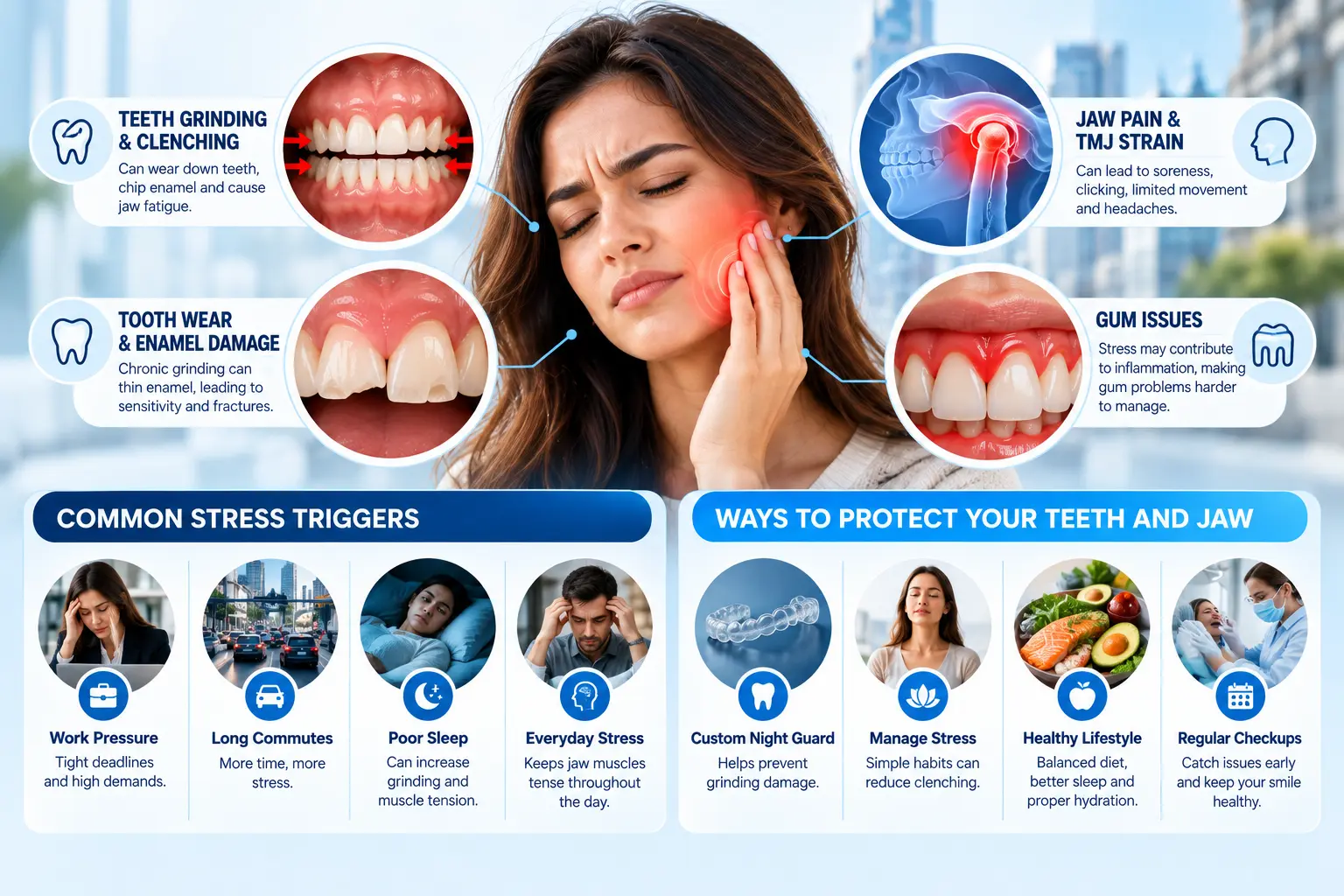
Stress triggers a physical response in the body. When stress becomes ongoing, muscles stay tense, sleep is disrupted, and habits like jaw clenching or teeth grinding can become more frequent. These changes can affect the teeth, gums, jaw joints, and even the soft tissues inside the mouth.
Most dental stress symptoms do not happen all at once. They often build slowly, which is why many patients do not connect them to stress right away. A person may first notice jaw soreness in the morning, then tooth sensitivity, and later headaches or a clicking jaw. By the time they seek care, the problem may already be affecting daily comfort.
Common Ways Stress Affects Your Teeth
Teeth grinding and clenching:
One of the most common ways stress affects your teeth is through bruxism, which is the medical term for grinding or clenching. Some people grind their teeth while asleep without realizing it. Others clench their jaw during the day while concentrating, commuting, or dealing with deadlines.
Over time, this can cause:
- Flattened or worn tooth surfaces
- Chipped enamel
- Cracks in the teeth
- Increased tooth sensitivity
- Jaw muscle fatigue
- Headaches, especially in the morning
Bruxism may not always be caused by stress alone, but emotional strain is a major contributing factor. In busy urban environments like Midtown Manhattan, daytime clenching is especially common because stress can stay elevated for hours.
Jaw pain and TMJ strain:
Your temporomandibular joints, often called the TMJ, connect your jaw to your skull. When you clench or grind, these joints and the surrounding muscles work harder than they should. This can lead to soreness, stiffness, or a feeling that your jaw is “tight.”
Symptoms may include:
- Pain near the ears or along the jawline
- Clicking or popping when opening the mouth
- Difficulty chewing certain foods
- Limited jaw movement
- Facial soreness
- Tension headaches
In some cases, stress can aggravate an underlying TMJ disorder. It does not always cause the condition, but it can make symptoms more noticeable and harder to manage.
Tooth wear and enamel damage:
Enamel is the hard outer layer that protects your teeth. It is strong, but it cannot regenerate once it is worn away. Chronic grinding can gradually thin enamel, leaving teeth more vulnerable to sensitivity, decay, and fractures.
Once enamel starts to wear down, treatment may become more complex. Some patients only need a protective night guard. Others may need bonding, crowns, or additional restorative work if the damage is more advanced.
Gum issues linked to stress:
Stress does not just affect teeth and jaw muscles. It may also influence gum health. People under prolonged stress may neglect brushing and flossing routines, eat more sugary foods, or sleep poorly, all of which can affect the gums.
Research also suggests that stress may affect the body’s inflammatory response, which can make gum disease more difficult to manage. While stress does not directly cause periodontal disease, it can contribute to the conditions that allow it to worsen.
Signs Your Stress May Be Affecting Your Mouth
If you are wondering whether your symptoms are dental-related, look for patterns such as:
- Waking up with jaw soreness
- Tooth sensitivity without an obvious cavity
- Headaches near the temples
- A clicking jaw when opening or closing your mouth
- Chipped, flattened, or worn teeth
- Tight facial muscles
- Tongue or cheek biting
- Indentations along the tongue or cheek
- Tightness when chewing hard or chewy foods
These symptoms do not always mean you have a serious problem, but they should not be ignored. Early evaluation can help prevent more significant damage.
Why Midtown Manhattan Patients Are Especially Affected
Life in Midtown Manhattan can be fast-paced and high pressure. Long hours at a desk, frequent meetings, packed transit, and limited downtime can all contribute to chronic stress. Many professionals also work through meals, skip hydration, or rely on caffeine to stay productive. These habits can intensify clenching, jaw tension, and enamel wear.
For patients in this environment, dental stress symptoms often become part of the daily routine before they are recognized as a treatable issue. That is why regular dental visits matter. A dentist can often spot signs of grinding or wear long before the patient notices a problem.
How a Dentist Diagnoses Stress-Related Dental Problems
During a dental exam, your dentist may check for:
- Tooth wear patterns
- Small cracks or fractures
- Tender jaw muscles
- Bite alignment issues
- Signs of gum recession
- Changes in the TMJ area
- Evidence of nighttime grinding
Your dentist may also ask about your sleep quality, stress levels, headaches, and whether you wake up with discomfort. This information helps determine whether your symptoms are likely related to bruxism, TMJ strain, or another issue.
In some cases, additional imaging may be recommended if the jaw joint or tooth structure needs closer evaluation.
Treatment Options for Stress-Related Teeth and Jaw Problems
Treatment depends on the underlying cause and severity of the symptoms. Some patients benefit from a simple preventive approach, while others need more involved care.
Night guards:
A custom night guard is one of the most common treatments for teeth grinding. It creates a protective barrier between the upper and lower teeth while you sleep, helping reduce wear and relieve pressure on the jaw.
Benefits:
- Protects enamel
- Reduces grinding damage
- Can ease jaw strain
- Custom fit for comfort
Tradeoffs:
- It does not stop stress itself
- It may take time to adjust to wearing it
- It needs proper cleaning and replacement over time
A custom guard is generally more effective than over-the-counter options because it is made to fit your bite. Store-bought guards can sometimes feel bulky or fit poorly, which may make them less comfortable for long-term use.
Bite adjustments or restorative dentistry:
If grinding has already damaged your teeth, restorative treatment may be needed. This could include bonding, crowns, or other repairs depending on the extent of the wear or fracture.
Benefits:
- Restores function and appearance
- Protects weakened teeth
- Helps prevent further damage
Tradeoffs:
- May require more than one visit
- Costs more than preventive care
- Does not stop the grinding habit by itself
Restorative treatment is often paired with a night guard so the repaired teeth are protected going forward.
TMJ-focused care:
If jaw pain is related to TMJ strain, your dentist may recommend a combination of approaches such as:
- A night guard
- Soft diet adjustments
- Jaw relaxation techniques
- Short-term anti-inflammatory guidance if appropriate
- Referral for physical therapy or specialist care when needed
The best plan depends on whether the issue is muscular, joint-related, or caused by bite stress.
Preventive care and monitoring:
For mild symptoms, monitoring may be enough at first. Regular checkups allow your dentist to track wear patterns and catch problems early.
This is especially important if you are not yet in pain. Many stress-related issues are easier and less expensive to manage before they progress.
At-Home Habits That Can Help
While professional care is important, small daily changes can reduce stress on your teeth and jaw.
Be aware of daytime clenching
Many people clench without noticing it. Try to check your jaw position throughout the day. Your teeth should not be touching when your mouth is at rest. Lips should be closed, teeth slightly apart, and jaw relaxed.
Avoid chewing on nonfood items
Chewing pens, ice, or fingernails can add stress to already overworked teeth and muscles.
Limit very hard or chewy foods during flare-ups
If your jaw is sore, temporarily reducing foods like bagels, tough meats, or hard candy may help.
Improve sleep quality
Poor sleep can make bruxism worse. A regular bedtime, less late-night screen use, and reduced caffeine intake may help support better rest.
Manage stress intentionally
Relaxation techniques such as deep breathing, exercise, stretching, and scheduled breaks may reduce clenching episodes. Even short pauses during the workday can help reset muscle tension.
Night Guard vs Restorative Treatment
Treatment | Best For | Main Benefit | Limitation |
|---|---|---|---|
Teeth grinding, clenching, mild TMJ strain | Protects teeth and reduces pressure on the jaw | Does not repair damage already done | |
Worn, chipped, or fractured teeth | Restores tooth structure and function | Requires more treatment and cost | |
Jaw pain, clicking, muscle tension | Addresses pain and movement issues | May involve multiple care steps | |
Early symptoms or mild wear | Helps catch damage early | Not enough if symptoms are progressing |
When to See a Dentist
You should schedule a dental visit if you notice:
- Persistent jaw soreness
- Tooth sensitivity that is getting worse
- A cracked or chipped tooth
- Headaches linked to jaw tightness
- Clicking, locking, or popping in the jaw
- Visible tooth wear
- Pain when chewing
If symptoms are severe or sudden, do not wait. Early treatment can protect both your comfort and your long-term oral health.
Conclusion
Chronic stress can affect far more than your mood and energy levels. It can also lead to clenching, grinding, jaw pain, tooth wear, and TMJ discomfort. If stress affects your teeth, the symptoms may start small but gradually become harder to ignore.
For busy professionals in Midtown Manhattan, these issues are often linked to long workdays, high pressure, and limited recovery time. The sooner you recognize the signs, the easier it is to protect your teeth and jaw from lasting damage.
With the right combination of dental care, preventive habits, and stress management, you can reduce discomfort and keep your smile healthy.
Frequently Asked Questions
Can stress really damage your teeth?
Yes. Stress can lead to clenching and grinding, which can wear down enamel, cause cracks, and strain the jaw. It can also contribute to headaches and TMJ discomfort.
How do I know if I grind my teeth at night?
Common signs include waking with jaw pain, headaches, or tooth sensitivity. A dentist may also notice worn enamel or small fractures during an exam.
Is a night guard worth it?
For many patients, yes. A custom night guard can help protect your teeth from further wear and reduce pressure on the jaw. It is most effective when made and fitted by a dentist.
Can stress cause TMJ disorder?
Stress does not always directly cause TMJ disorder, but it can worsen symptoms by increasing clenching, muscle tension, and grinding habits.
Will my teeth recover from grinding damage?
Some damage can be repaired with bonding, crowns, or other restorative treatments. However, enamel wear does not grow back, which is why early prevention is so important.
Why Midtown Manhattan Professionals Choose Blue Whale Dental
If you are noticing jaw pain, tooth sensitivity, or signs of grinding, Blue Whale Dental in Midtown Manhattan can help. Schedule a visit with our team to evaluate your symptoms and find the right treatment plan for your needs. Early care can make a meaningful difference in protecting your teeth, jaw, and overall comfort.
At Blue Whale Dental NYC, we provide advanced and personalized solutions for missing teeth, including implants, bridges, and full restorative care tailored to your needs.
Ready to book your dentist appointment in Midtown NYC Visit our clinic or schedule your appointment today with our expert dental team.
Address: 10 W. 46th Street #1402 New York, NY 10036
Email: info@bluewhaledental.com
Call Now : 212-752-1252