
When it comes to preventing cavities, most people want a simple answer: is an electric toothbrush better than a manual one?
The truth is a little more nuanced. Both electric and manual toothbrushes can clean your teeth effectively when used correctly, but research consistently shows that electric toothbrushes often remove more plaque and reduce gingivitis more effectively over time. Since plaque is the main driver of cavities, that can make a real difference for many patients.
Still, the best toothbrush is not always the most expensive one or the one with the most features. It is the one you will use properly, consistently, and twice a day. In this guide, we will compare electric toothbrush vs manual brushing for cavity prevention, explain the tradeoffs, and help you choose the best option for your smile.
Why cavity prevention starts with plaque control?
Cavities form when bacteria in plaque feed on sugars and produce acids that attack tooth enamel. If plaque is not removed regularly, those acids can weaken enamel and lead to decay.
That is why brushing matters so much. A toothbrush does not just make your mouth feel clean. It disrupts plaque before it has time to harden into tartar or cause damage.
The main question is not whether you should brush. It is how effectively your toothbrush helps you remove plaque from all tooth surfaces, especially along the gumline and in hard-to-reach areas.
Electric Toothbrush vs Manual: what the evidence suggests
Multiple studies have found that electric toothbrushes, especially oscillating-rotating models, can remove more plaque than manual toothbrushes and improve gum health. Some long-term research also suggests they may reduce cavities modestly by improving overall oral hygiene habits and making brushing more effective.
That said, both types can work well.
A manual toothbrush can absolutely prevent cavities if you:
- Brush for two full minutes
- Use fluoride toothpaste
- Brush twice daily
- Cover all tooth surfaces
- Replace the brush regularly
- Floss or clean between teeth daily
An electric toothbrush may make those habits easier to maintain and may be more forgiving if you struggle with technique, dexterity, or consistency.
How electric toothbrushes may help prevent cavities
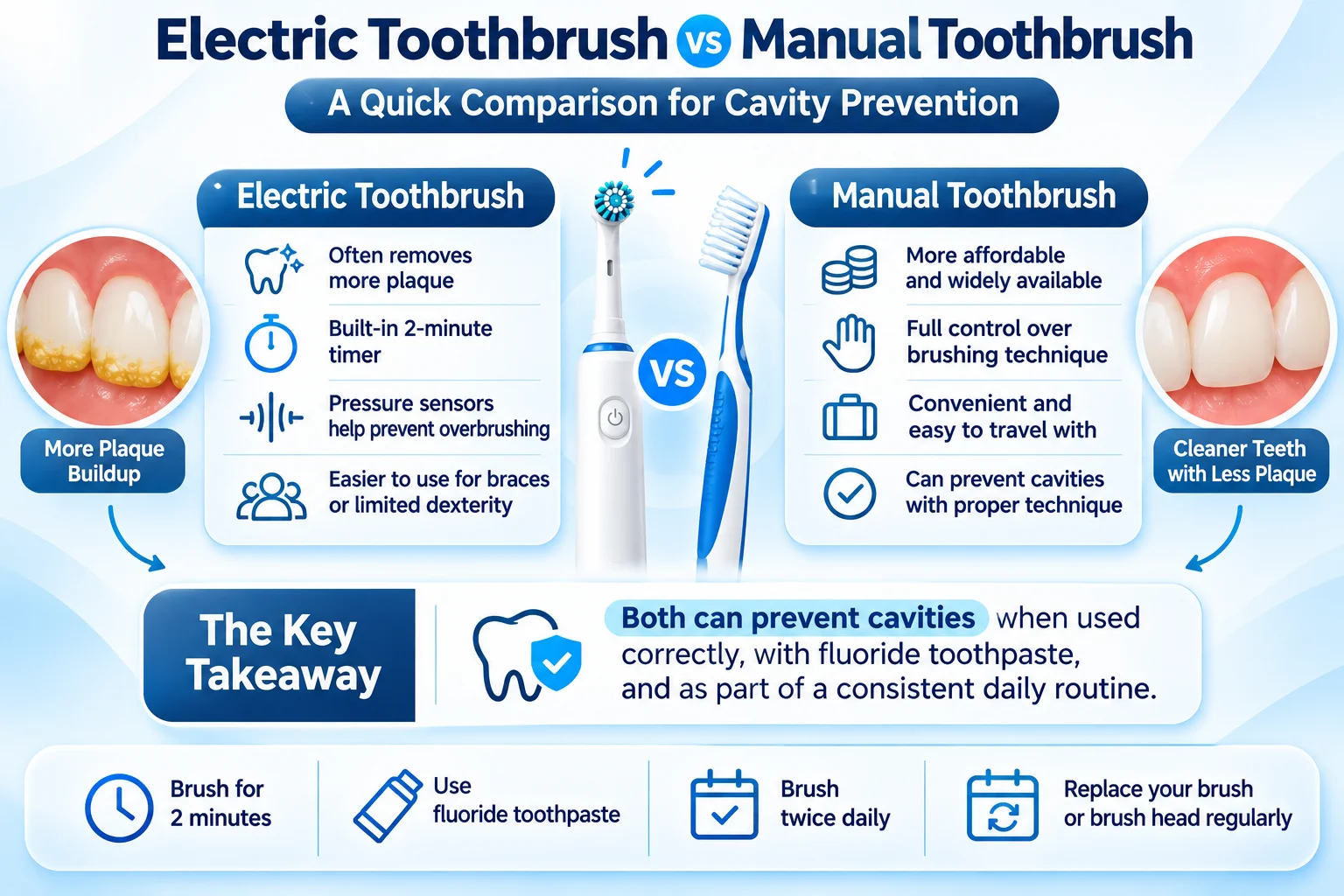
Electric toothbrushes can offer several advantages when your goal is cavity prevention.
Better plaque removal:
Many electric brushes use rapid movements that do some of the cleaning work for you. This can help remove plaque more efficiently, especially along the gumline and around back teeth.
Built-in timers:
A lot of electric models include a two-minute timer and quadrant pacing. This is helpful because many people brush for less time than they think.
Pressure sensors:
Some electric toothbrushes alert you when you are pressing too hard. Overbrushing can irritate gums and wear enamel over time, so this feature can help protect oral tissues.
Helpful for people with limited dexterity:
Patients with arthritis, braces, developmental conditions, or other dexterity challenges may find electric toothbrushes much easier to use effectively.
Encourages better consistency:
For many people, an electric brush feels more effective and easier to stick with, which can improve long-term oral hygiene habits.
Where manual toothbrushes still shineWhere manual toothbrushes still shine
Manual toothbrushes remain a reliable and affordable option. They are widely available, easy to travel with, and require no charging or batteries.
Lower cost:
This is a major benefit. A manual toothbrush is inexpensive and can still do an excellent job when used properly.
Full control:
Some people prefer the tactile feedback of a manual brush. They feel more in control of pressure and stroke patterns.
Easy to replace:
Manual brushes are simple, compact, and ideal for travel or quick backup use.
Effective with good technique
If you are precise, consistent, and disciplined about brushing, a manual toothbrush can prevent cavities just as well as an electric one in many situations.
The real difference is often technique
One of the biggest misconceptions in oral care is that the toothbrush itself does all the work. In reality, the person using it matters just as much.
A high-end electric toothbrush will not prevent cavities if you brush for 30 seconds, skip the gumline, or miss back molars. Likewise, a manual brush can be very effective if used with the right method.
Good brushing technique matters more than many people realize:
- Angle bristles toward the gumline
- Use gentle circular or short back-and-forth motions
- Clean the outer, inner, and chewing surfaces
- Brush along the tongue side of the teeth
- Spend enough time on each quadrant
- Use fluoride toothpaste
Who may benefit most from an electric toothbrush
An electric toothbrush is often a smart choice for people who are more likely to miss plaque with a manual brush.
Children and teens:
Kids and teens are still developing brushing habits. An electric toothbrush with a timer can help them brush long enough and more thoroughly.
Adults with a history of cavities:
If you are cavity-prone, every improvement in plaque removal matters. An electric brush may help reduce decay risk when paired with fluoride toothpaste and regular dental visits.
People with gum inflammation:
If your gums bleed easily or you have early gingivitis, electric brushing may help reduce inflammation more effectively.
Patients with braces, bridges, or implants:
Oral hygiene can be harder around orthodontic appliances and restorations. Electric brushes can make it easier to clean around hardware, though they still need to be used carefully.
Those with limited dexterity:
Anyone who struggles with manual brushing due to arthritis, tremors, or coordination issues may do better with an electric model.
When a manual toothbrush may be the better choice
A manual toothbrush may be the right option if:
- You brush carefully and consistently
- You travel frequently and want something simple
- You prefer a budget-friendly solution
- You have tried electric brushes and did not use them regularly
- You are comfortable with your technique and your dentist is satisfied with your oral health
If your dentist sees low plaque levels, healthy gums, and minimal cavities, a manual brush may already be doing the job well.
What actually prevents cavities best
The best cavity prevention strategy is not about choosing sides in the electric toothbrush vs manual debate. It is about combining the right tools and habits.
1. Brush twice a day with fluoride toothpaste
Fluoride helps strengthen enamel and repair early damage before it becomes a cavity.
2. Clean between teeth daily
Toothbrushes clean most surfaces, but not all. Floss, interdental brushes, or other interdental cleaners help remove plaque between teeth where cavities often begin.
3. Limit frequent snacking and sugary drinks
The more often your teeth are exposed to sugar and acid, the more opportunity bacteria have to cause decay.
4. Get regular dental cleanings and exams
Professional cleanings remove tartar, and exams can catch early decay before it becomes a bigger problem.
5. Use sealants or fluoride treatments when recommended
For patients at higher risk of cavities, preventive treatments can add an extra layer of protection.
Electric toothbrush vs manual: how to choose?
If you are still deciding, think about your oral health goals, habits, and budget.
Choose an electric toothbrush if you want:
- A more guided brushing experience
- A timer and pressure feedback
- Better support for plaque control
- Help with dexterity or consistency
Choose a manual toothbrush if you want:
- A simple and affordable option
- Easy portability
- A brush that works well with strong technique
- Something you already use comfortably and consistently
The best option is the one you will use correctly every day.
Common mistakes that reduce cavity prevention
No matter which toothbrush you use, some habits can cancel out the benefits.
Brushing too quickly
A rushed brushing session often misses plaque, especially in the back teeth and along the gumline.
Using too much pressure
Hard scrubbing can irritate gums and contribute to enamel wear. Gentle pressure is more effective and safer.
Skipping the inside surfaces of teeth
The tongue side of the front and back teeth is easy to forget but important to clean.
Not replacing the brush head or brush
A worn brush is less effective. Replace manual brushes about every three to four months, or sooner if bristles fray. Replace electric brush heads on a similar schedule.
Relying on brushing alone
Cavity prevention works best when brushing is combined with flossing, fluoride, and a balanced diet.
What dentists usually recommend
Many dentists recommend electric toothbrushes for patients who want help improving plaque removal or who have a higher risk of cavities or gum disease. However, dentists also know that a well-used manual brush can be highly effective.
In practice, the recommendation often depends on:
- Your cavity history
- Your brushing habits
- Your gum health
- Your dexterity
- Your orthodontic or restorative work
- Your budget and preferences
At Blue Whale Dental, we focus on what will work best for your individual oral health, not just what looks best on a shelf.
Feature | Electric Toothbrush | Manual Toothbrush |
|---|---|---|
Plaque removal | Often more effective, especially with proper use | Effective with good technique |
Cavity prevention | May offer a modest advantage for many users | Works well if used correctly and consistently |
Ease of use | Helpful for many patients, especially those with dexterity issues | Requires more technique and attention |
Timers and sensors | Often included | Not available |
Cost | Higher upfront cost | Low cost |
Travel convenience | Less convenient, needs charging or batteries | Very convenient |
Best for | Patients who want guided brushing and better plaque control | Patients who prefer simplicity and already brush well |
Final Thoughts
When comparing electric toothbrush vs manual for cavity prevention, the winner is not always as simple as one being universally better. Electric toothbrushes often have the edge in plaque removal and convenience, especially for people who need help with technique or consistency. But manual toothbrushes can still do an excellent job when used properly.
The best choice depends on your habits, oral health needs, and how likely you are to stick with the routine. If your current toothbrush helps you brush thoroughly twice a day, that is a strong foundation for cavity prevention.
What matters most is not the label on the brush. It is the quality of your daily routine.
Frequently Asked Questions About Tooth Brushes
Is an electric toothbrush better than a manual toothbrush for cavities?
In many cases, yes. Electric toothbrushes often remove more plaque and may help reduce cavity risk, but a manual toothbrush can still be very effective when used correctly.
Can a manual toothbrush prevent cavities?
Yes. A manual toothbrush can prevent cavities if you brush twice daily with fluoride toothpaste, clean all tooth surfaces thoroughly, and floss daily.
Which type is best for kids?
Many children benefit from electric toothbrushes because timers and automatic movement can improve brushing time and technique. That said, supervision is still important.
Do electric toothbrushes damage enamel?
Not when used properly. In fact, some models help prevent overbrushing with pressure sensors. The key is using gentle pressure and the correct technique.
How often should I replace my toothbrush or brush head?
Replace manual toothbrushes and electric brush heads about every three to four months, or sooner if the bristles look worn.
Does brushing harder clean better?
No. Aggressive brushing can irritate gums and wear down enamel. Gentle, consistent brushing is more effective.
Why Midtown Manhattan Professionals Choose Blue Whale Dental
If you are unsure whether an electric toothbrush or manual toothbrush is best for your teeth, Blue Whale Dental can help. Our team can assess your cavity risk, review your brushing technique, and recommend the right preventive care plan for your smile. Schedule your visit today and take the next step toward healthier teeth and fewer cavities.
At Blue Whale Dental NYC, we provide advanced and personalized solutions for missing teeth, including implants, bridges, and full restorative care tailored to your needs.
Ready to book your dentist appointment in Midtown NYC Visit our clinic or schedule your appointment today with our expert dental team.
Address: 10 W. 46th Street #1402 New York, NY 10036
Email: info@bluewhaledental.com
Call Now : 212-752-1252