
Stress does not just affect your mind and body. It can also show up in your mouth. Many people first notice the effects as jaw soreness, headaches, worn teeth, or bleeding gums. That leads to an important question: Can Stress Cause Gum Disease or teeth grinding?
The short answer is that stress can absolutely contribute to teeth grinding and clenching, and it may also play an indirect role in gum disease. Stress does not directly “cause” periodontal disease on its own, since gum disease starts with plaque and bacteria. But stress can weaken your body’s defenses, disrupt daily habits, and make oral health problems harder to control.
At Blue Whale Dental in Midtown Manhattan, we often see patients whose oral symptoms are tied to busy schedules, high stress, and disrupted sleep. The good news is that both grinding and gum disease are manageable when caught early.
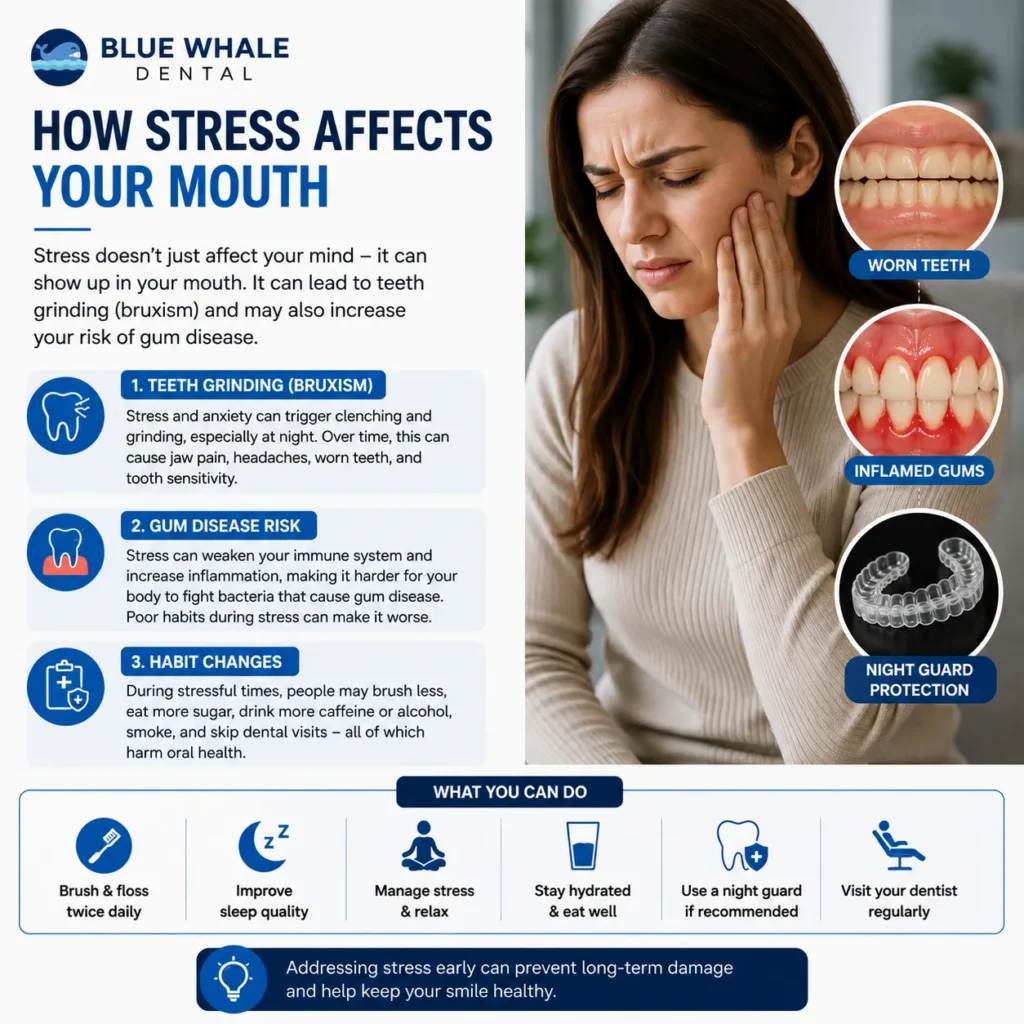
How Stress Affects Your Mouth?
Stress triggers a chain reaction in the body. When you are under pressure, your muscles tense, your sleep can suffer, and your immune system may not function at its best. These changes can affect the mouth in a few important ways.
Stress can increase clenching and grinding
Many people clench their teeth during the day without realizing it. Others grind their teeth at night while sleeping. This is called bruxism. Stress and anxiety are among the most common contributors.
Teeth grinding can lead to:
- Tooth wear and flattened chewing surfaces
- Cracked or chipped teeth
- Jaw pain or tightness
- Morning headaches
- Ear discomfort
- Damage to fillings, crowns, or veneers
Some patients do not know they grind until a dentist notices the wear patterns. Others notice that their jaw feels tired or painful, especially after a demanding work week or a stressful period.
Stress can affect the immune system
Gum disease begins when plaque builds up along the gumline. If plaque is not removed regularly, the gums become inflamed. Over time, this can progress from gingivitis to periodontitis.
Stress may not directly create plaque, but it can make it harder for your body to fight the inflammation caused by bacteria. Research suggests stress can influence immune response, increase inflammation, and slow healing. That means your gums may be less resilient when plaque is present.
Stress can change habits that protect oral health
- During stressful periods, people may:
- Brush or floss less often
- Eat more sugary or acidic snacks
- Drink more coffee, energy drinks, or alcohol
- Smoke or vape more
- Skip dental appointments
- Sleep poorly
These habits can all increase the risk of gum disease and other dental problems.
Can Stress Cause Gum Disease?
Stress is best understood as a risk factor, not the sole cause, of gum disease.
Gum disease develops when bacteria in plaque irritate the gums. If plaque is not removed, the gums become red, swollen, and bleed easily. In advanced cases, the bone supporting the teeth can break down.
Stress can make this process worse in several ways:
- It can weaken immune response.
- It can increase inflammation in the body.
- It may reduce saliva flow in some people, leading to a drier mouth.
- It can make people neglect oral hygiene or professional cleanings.
So while stress does not directly “create” gum disease, it can absolutely make you more vulnerable to it.
Signs stress may be affecting your gums
- Watch for:
- Bleeding when brushing or flossing
- Puffy or tender gums
- Bad breath that does not go away
- Gum recession
- Loose teeth
- Sensitivity at the gumline
- If you notice these symptoms, it is worth scheduling an exam. Early gum disease is much easier to treat than advanced periodontal disease.
Can Stress Cause Teeth Grinding?
Yes, stress is one of the biggest contributors to bruxism.
For many people, grinding is tied to emotional tension, concentration, or sleep disturbance. Some patients clench while working at a computer, driving, or focusing on deadlines. Others grind at night without knowing it.
Common signs of teeth grinding:
- You may be grinding or clenching if you have:
- Worn, chipped, or flattened teeth
- Jaw pain or stiffness
- Headaches, especially in the morning
- Tooth sensitivity
- Soreness in the temples
- Clicking or popping in the jaw
- Tight facial muscles
- Indentations on the tongue or cheek biting
If left untreated, bruxism can lead to fractures, gum irritation, and even problems with the jaw joint.
How Gum Disease and Teeth Grinding Can Work Together?
Stress related grinding and gum disease are different problems, but they can overlap.
When gums are inflamed, the tissues and bone that support the teeth are already under stress. Heavy clenching and grinding add extra force. That can make teeth more mobile and may worsen discomfort.
In some cases, patients with gum disease notice that grinding feels worse because the supporting structures are weakened. In other cases, grinding causes the teeth to shift slightly, which can make cleaning harder and allow plaque to collect more easily.
This is one reason preventive care matters. If you address both inflammation and bite stress early, you may avoid more serious treatment later.
What to Do If You Think Stress Is Hurting Your Oral Health?
If you suspect that stress is affecting your mouth, the best first step is a dental exam. A dentist can check for wear, gum inflammation, bite problems, and signs of infection.
At-home steps that can help
For teeth grinding:
- Pay attention to daytime clenching
- Keep your teeth slightly apart when at rest
- Avoid chewing gum for long periods
- Reduce caffeine late in the day
- Use a warm compress on sore jaw muscles
- Practice stress reduction before bed
For gum health:
- Brush twice a day with a soft-bristled toothbrush
- Floss once daily
- Use an antibacterial mouth rinse if recommended
- Stay hydrated
- Limit frequent sugary snacks
- Keep up with dental cleanings
These steps are helpful, but they are not always enough on their own if there is active gum disease or significant bruxism.
Treatment Options: What Works and What to Consider?
Treatment depends on whether your main issue is grinding, gum disease, or both.
Night guard therapy:
A custom night guard can protect the teeth from grinding forces while you sleep. It does not stop the grinding habit itself, but it can reduce damage.
Benefits:
- Protects enamel and restorations
- Reduces tooth wear
- May lessen jaw discomfort
Tradeoffs:
- Needs to be worn consistently
- May feel bulky at first
- Must be custom-made for the best fit
A store-bought guard may seem easier, but custom appliances are usually more comfortable and effective.
If gum disease is present, treatment may include:
- Professional deep cleaning
- Scaling and root planing
- Antibacterial therapy in some cases
- More frequent maintenance visits
Benefits:
- Removes bacteria below the gumline
- Helps reduce inflammation
- Can prevent progression of disease
Tradeoffs:
- May require more than one visit
- Can cause temporary sensitivity
- Maintenance is essential for long term success
If grinding has damaged teeth or changed your bite, treatment may include restorations such as crowns, bonding, or replacing worn dental work. In some cases, adjustments are needed to balance the bite.
Benefits:
- Restores function and appearance
- Protects weakened teeth
- Improves comfort
Tradeoffs:
- More complex cases may require several steps
- Restorative work does not eliminate stress related habits
Stress management and sleep support:
Because stress is often a major driver of clenching and grinding, it helps to address the root cause too. Depending on your situation, that may include:
- Exercise
- Therapy or counseling
- Mindfulness or breathing practices
- Better sleep routines
- Reduced screen time before bed
- Medical evaluation for sleep disorders if needed
If bruxism is severe at night, it may be worth discussing whether sleep quality or airway issues could be contributing.
| Condition | Main Cause | Common Signs | Best Treatment | Can Stress Make It Worse? |
|---|---|---|---|---|
| Teeth grinding (bruxism) | Clenching, grinding, sleep issues, stress | Jaw pain, worn teeth, headaches, sensitivity | Custom night guard, stress management, dental repair | Yea |
| Gum disease | Plaque and bacteria | Loose teeth, soreness, gum inflammation, wear | Professional cleaning, deep cleaning, maintenance | Yes, Indirectly |
| Both together | Plaque plus bite stress | Severe pain, gum swelling, facial swelling, pus, broken tooth, headache, disturbed sleep | Combined periodontal care and night guard | Yes |
Why Midtown Manhattan Patients Often Delay Treatment?
Life in Midtown Manhattan can be fast-paced. Long work hours, commuting, meetings, travel, and constant pressure can make dental symptoms easy to ignore. Many patients assume jaw pain or bleeding gums will pass once things calm down.
Unfortunately, these issues often get worse over time.
A little gum bleeding here and there may seem minor, but it can be an early sign of inflammation. A bit of morning jaw soreness may seem manageable until it starts affecting your sleep or wearing down your teeth. Getting checked early can save time, money, and discomfort later.
When to See a Dentist?
- You should schedule a dental visit if you have:
- Bleeding gums for more than a week
- Persistent bad breath
- Gum recession
- Loose teeth
- Jaw pain or morning headaches
- Cracked, chipped, or sensitive teeth
- A partner who notices grinding during sleep
If you already have a history of gum disease, regular maintenance is especially important. If you grind your teeth, a custom appliance may help protect your smile before more damage happens.
Conclusion
So, can stress cause gum disease or teeth grinding? Stress is a major factor in teeth grinding and can indirectly contribute to gum disease by affecting your immune system, habits, and oral hygiene. If you are clenching your jaw, waking up with headaches, or noticing bleeding gums, your mouth may be telling you that stress is taking a toll.
The good news is that early treatment can make a big difference. With the right combination of preventive care, periodontal treatment, and bruxism protection, you can reduce discomfort and protect your smile.
Frequently Asked Questions
Can stress cause gum disease by itself?
Not directly. Gum disease starts with plaque and bacteria, but stress can make it worse by affecting immune response, increasing inflammation, and making healthy oral-care habits harder to maintain.
Can stress cause teeth grinding at night?
Yes. Stress is a common contributor to night time teeth grinding, also called bruxism. It can lead to worn or chipped teeth, jaw pain, morning headaches, and tooth sensitivity.
How do I know if I grind my teeth?
Common signs of nighttime teeth grinding include jaw soreness or stiffness, worn or flattened teeth, morning headaches, tooth sensitivity, and tight facial muscles. A dentist can also identify tooth-wear patterns during an examination.
Can gum disease cause teeth grinding?
Gum disease does not usually cause teeth grinding. However, gum inflammation, weakened tooth-supporting tissues, and grinding can occur together and may make discomfort or bite problems more noticeable.
Will a night guard stop me from grinding my teeth?
A night guard can protect your teeth from grinding damage, but it may not stop the grinding habit itself. Depending on the cause, stress management, sleep support, and other dental treatments may also be recommended.
Can gum disease be reversed?
Early gum disease, called gingivitis, is often reversible with professional dental cleanings and good daily oral hygiene. Periodontitis is not fully reversible, but it can be managed with appropriate periodontal treatment and ongoing maintenance.
Why Midtown Manhattan Professionals Choose Blue Whale Dental
If you are noticing signs of teeth grinding, gum irritation, or both, Blue Whale Dental in Midtown Manhattan can help. Schedule an appointment with our team for a thorough evaluation and personalized treatment plan. We are here to protect your smile before small issues become bigger problems.
At Blue Whale Dental NYC, we provide advanced and personalized solutions for missing teeth, including implants, bridges, and full restorative care tailored to your needs.
Ready to book your dentist appointment in Midtown NYC Visit our clinic or schedule your appointment today with our expert dental team.
Address: 10 W. 46th Street #1402 New York, NY 10036
Email: info@bluewhaledental.com
Call Now : 212-752-1252