
Healthy gums do a lot more than hold teeth in place. They protect the roots of your teeth, support your bite, and help keep bacteria from causing deeper damage. When gum disease, recession, or excess gum tissue starts affecting your oral health, conservative treatment is not always enough. In those cases, gum surgery may be recommended.
If you have been told you may need gum surgery, it is normal to have questions. What does the procedure involve? Is it painful? How long does recovery take? And how do you know whether surgery is actually the right option?
At Blue Whale Dental, we understand that periodontal treatment is not something most patients think about until they need it. This guide explains the most common types of gum surgery, the reasons it may be recommended, the benefits and tradeoffs, and what recovery typically looks like.
What Is Gum Surgery?
Gum surgery refers to a range of dental procedures designed to treat gum disease, correct gum recession, reshape the gums, or improve access for cleaning and restorative care. The specific procedure depends on the problem being treated.
Some gum surgeries are aimed at removing bacteria and reducing periodontal pockets. Others are performed to restore lost gum tissue, improve the appearance of a smile, or expose more of a tooth for a crown or filling.
In many cases, gum surgery is part of a broader treatment plan that may also include deep cleaning, antibiotic therapy, and long-term periodontal maintenance.
When Is Gum Surgery Recommended?
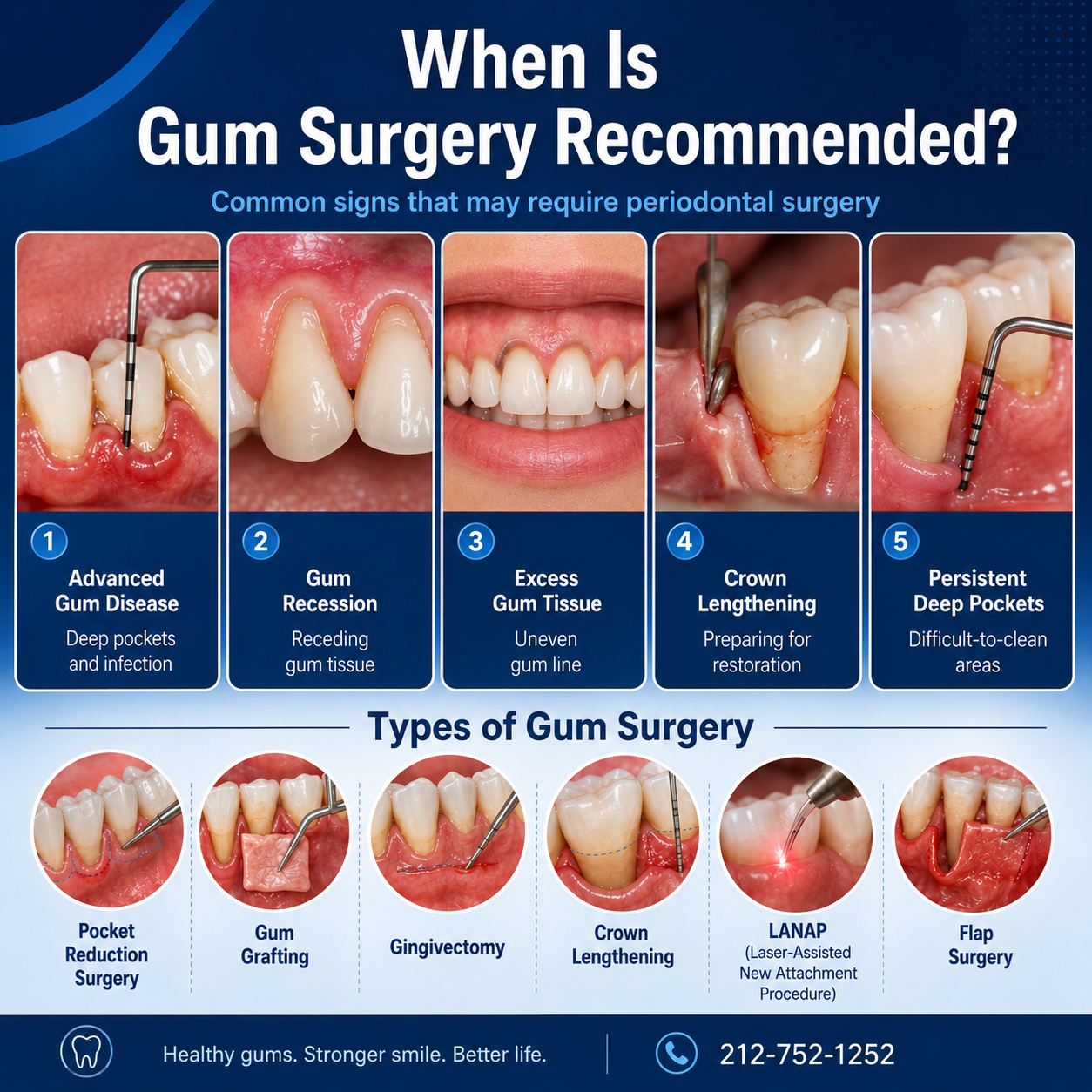
A dentist or periodontist may recommend gum surgery when non-surgical treatment is not enough to control the issue. Common reasons include:
I. Advanced gum disease:
When plaque and tartar build up below the gumline, the gums can become inflamed and begin pulling away from the teeth. This creates deep pockets where bacteria can thrive. If scaling and root planing do not improve the condition enough, surgery may be needed to clean the area more thoroughly.
II. Gum recession:
Gum recession exposes the roots of teeth, which can lead to sensitivity, decay, and a less balanced smile. In some cases, gum grafting can help restore lost tissue and protect the teeth.
III. Excess gum tissue:
Some patients have a “gummy” smile or gums that cover too much of the teeth. A gingivectomy or contouring procedure may be used to create a more even gum line.
IV. Crown lengthening:
If a tooth breaks near the gumline or does not have enough exposed structure for a restoration, crown lengthening can make it possible to place a crown or filling properly.
V. Persistent deep pockets:
Even after deep cleaning, some pockets remain too deep for effective home care. Surgery can reduce the pocket depth and make future maintenance easier.
Types of Gum Surgery
There are several kinds of periodontal surgery, and each serves a different purpose.
What Causes Gum Problems in the First Place?
Gum disease is usually caused by plaque buildup, but several factors can increase the risk or make treatment more complicated.
- Poor oral hygiene: Inconsistent brushing and flossing allow bacteria to remain on the teeth and gums.
- Smoking or tobacco use: Tobacco slows healing and increases the risk of periodontal disease.
- Genetics: Some people are more prone to gum disease even with good home care.
- Hormonal changes: Pregnancy, menopause, and other hormonal shifts can affect gum sensitivity and inflammation.
- Medical conditions: Diabetes, certain autoimmune conditions, and medications that reduce saliva or cause gum overgrowth can contribute to gum issues.
- Teeth grinding: Excess pressure on the teeth can worsen gum recession in some patients.
How Is Gum Surgery Performed?
The exact process depends on the procedure, but most gum surgeries follow a similar general path.
Before the procedure:
Your dentist will evaluate your gums, measure pocket depths, and review X-rays if needed. You may be asked about medications, medical conditions, and any history of bleeding issues. If you have active infections or uncontrolled health concerns, those may need to be addressed first.
During the procedure:
Local anesthesia is commonly used to numb the area. Some patients may also receive sedation depending on the complexity of the surgery and their comfort level.
The dentist or periodontist then performs the planned treatment, whether that involves cleaning beneath the gums, removing tissue, placing a graft, or reshaping the gum line.
After the procedure:
The treated area may be covered with a dressing or left to heal naturally, depending on the procedure. You will receive home care instructions, which may include: Soft foods for a short period, Careful brushing around the area, Avoiding flossing directly over the surgical site until instructed, Rinsing with a medicated mouthwash if prescribed, Taking pain relief or antibiotics if recommended
What Is Recovery Like?
Recovery varies based on the type of surgery performed and the extent of treatment. Some patients feel back to normal in a few days, while others need one to two weeks for the area to feel comfortable again.
Common recovery symptoms:
- It is normal to experience:
- Mild swelling
- Tenderness
- Light bleeding for the first day or two
- Sensitivity to hot or cold
- Temporary changes in how the gums look or feel
Tips for smoother healing
- To support recovery:
- Eat soft foods such as yogurt, eggs, soup, and mashed potatoes
- Avoid crunchy, spicy, or very hot foods at first
- Do not smoke or use tobacco
- Brush gently and follow your provider’s instructions
- Keep all follow-up appointments
When to call your dentist
- Contact your dental office if you notice:
- Heavy bleeding that does not stop
- Severe pain that worsens instead of improving
- Fever
- Swelling that increases after the first few days
- A graft or dressing that appears to have shifted significantly
Benefits of Gum Surgery
- When gum surgery is recommended at the right time, it can provide meaningful long-term benefits.
- Better control of gum disease: Reducing deep pockets makes it harder for bacteria to hide and easier to maintain oral hygiene.
- Protection for exposed roots: Treating recession can reduce sensitivity and lower the risk of root decay.
- Improved tooth stability: Healthy gums help support the teeth. In some cases, surgery can help preserve teeth that might otherwise be at risk.
- Easier home care: When the gumline is healthier and more manageable, brushing and flossing become more effective.
- Cosmetic improvement: Some procedures also improve smile symmetry and overall appearance.
- Tradeoffs and Limitations to Consider Gum surgery can be highly effective, but it is important to understand the limitations before deciding on treatment.
- Not a cure for gum disease: Surgery treats the effects of periodontal disease, but long-term success depends on daily home care and professional maintenance.
- Recovery time: Even minor procedures may require several days of modified eating and oral care.
- Tooth sensitivity: If the gums are repositioned or recession is treated, some sensitivity may continue for a while.
- Cost and follow-up care: The complexity of periodontal treatment can affect cost, and maintenance visits are usually necessary to preserve results.
- Results depend on gum health and habits: Smoking, poor plaque control, and uncontrolled medical conditions can reduce the success of treatment.
Living and working in Midtown Manhattan often means long days, packed schedules, and limited time to deal with dental problems. That is one reason periodontal issues can go untreated longer than they should. A small amount of bleeding or gum sensitivity may seem easy to ignore, but gum disease can progress quietly.
Access to comprehensive care matters. Patients in Midtown Manhattan often benefit from a treatment plan that balances precision, convenience, and clear communication. At Blue Whale Dental, the goal is to make periodontal care as manageable as possible while helping patients understand their options and what each step means for their oral health.
Comparison Table
| Procedure | Main Purpose | Typical Benefits | Possible Tradeoffs |
|---|---|---|---|
| Pocket reduction surgery | Remove bacteria and reduce deep gum pockets | Better disease control, easier cleaning | Healing time, temporary sensitivity |
| Gum grafting | Restore lost gum tissue | Less sensitivity, root protection, better appearance | Longer recovery, graft healing required |
| Gingivectomy | Remove excess gum tissue | More balanced gumline, easier hygiene | Temporary soreness, tissue changes |
| Crown lengthening | Expose more tooth structure | Allows restoration placement, improves symmetry | May alter appearance, healing period |
| Laser gum treatment | Treat selected periodontal issues with less invasiveness | Less bleeding in some cases, quicker comfort | Not ideal for all cases, may not replace surgery |
Conclusion
Gum surgery can play an important role in protecting your teeth and preserving your oral health when gum disease or tissue changes become more advanced. While it is not the first step for every patient, it can be an effective way to reduce infection, restore gum health, and make long-term maintenance more successful.
If you are considering gum surgery, it helps to work with a dental team that takes the time to explain your options, expected recovery, and practical tradeoffs. The best treatment plan is one that addresses the current problem while supporting your long-term comfort and oral health.
Frequently Asked Questions
Is gum surgery painful?
Most patients do not feel pain during the procedure because the area is numbed with local anesthesia. Afterward, discomfort is usually mild to moderate and can often be managed with medication and home care instructions.
How long does gum surgery recovery take?
Initial healing often takes about one to two weeks, depending on the procedure. Full tissue healing can take longer, especially for grafting or more involved periodontal surgery.
Do I always need surgery if I have gum disease?
No. Early gum disease can often be treated with non-surgical approaches such as professional cleanings, scaling and root planing, and improved home care. Surgery is usually considered when the disease is more advanced or not responding well to conservative treatment.
Will gum surgery change my smile?
It can, depending on the procedure. Some treatments reduce excess gum tissue or expose more of the tooth, which may create a more balanced look. Others, like grafting, are designed more to protect the gums than to change appearance.
How do I know if I need gum surgery?
Signs that surgery may be needed include persistent bleeding, gum recession, deep pockets, loose teeth, or ongoing inflammation after deep cleaning. A dental exam and periodontal evaluation are the best ways to determine the right treatment.
Why Midtown Manhattan Professionals Choose Blue Whale Dental
If you are noticing bleeding gums, gum recession, or signs of periodontal disease, schedule a consultation with Blue Whale Dental in Midtown Manhattan. Our team can evaluate your gums, explain whether surgery is necessary, and help you understand the most effective path forward for your smile.
At Blue Whale Dental NYC, we provide advanced and personalized solutions for missing teeth, including implants, bridges, and full restorative care tailored to your needs.
Ready to book your dentist appointment in Midtown NYC Visit our clinic or schedule your appointment today with our expert dental team.
Address: 10 W. 46th Street #1402 New York, NY 10036
Email: info@bluewhaledental.com
Call Now : 212-752-1252