
Airway orthodontics for kids is becoming increasingly important for families in Midtown Manhattan as more parents recognize the connection between jaw development, breathing, sleep quality, and daily focus.
In the busy rhythm of Midtown Manhattan life filled with late nights, small apartments, busy school schedules, and constant city noise parents often focus on visible dental concerns like crooked teeth or crowded smiles. But a deeper and often overlooked issue may be affecting many NYC children: airway health and jaw development.
When a child’s upper or lower jaw does not develop properly or remains too narrow, it can reduce airway space and contribute to mouth breathing, snoring, restless sleep, and interrupted breathing patterns. Over time, these issues may also affect daytime energy, concentration, mood, and school performance.
Airway orthodontics is a modern approach that looks beyond traditional teeth straightening. Instead, it evaluates how jaw growth, breathing patterns, and facial development work together to support long-term oral and overall health. At Blue Whale Dental, many Midtown families seek airway orthodontics for kids after noticing concerns like poor sleep, chronic mouth breathing, or difficulty focusing during the day.
Here’s what every NYC parent should know about the relationship between jaw development, breathing health, sleep quality, and childhood well-being.
How Jaw Development Affects Breathing and Sleep
During childhood growth (especially ages 6–12), the upper jaw (maxilla) and lower jaw form the foundation of the airway. A narrow palate or retruded lower jaw can reduce space behind the tongue, making nasal breathing harder especially at night.
Common consequences include:
- Chronic mouth breathing (even without obvious allergies)
- Snoring or noisy breathing during sleep
- Restless sleep with frequent tossing or waking
- Morning fatigue or difficulty concentrating at school
- Forward head posture or dark circles under the eyes
These signs are surprisingly common in urban environments like Manhattan, where allergies, dry indoor air, and small living spaces can compound the issue.
The Role of Airway Orthodontics for Kids
Airway-focused orthodontics uses gentle guidance during growth to:
- Widen a narrow upper jaw (improving nasal airflow)
- Encourage proper jaw positioning
- Support better tongue posture
- Create more room for the airway
This can lead to easier nasal breathing, quieter sleep, and better daytime energy and focus. Early intervention during the growth phase often yields the best results and can simplify future orthodontic care.
Note: Airway Orthodontists for Kids play a key role in screening for airway concerns and referring to sleep specialists or ENTs when needed (as per updated AAO guidelines on sleep-disordered breathing).
5 Common Signs of Airway Issues in Children
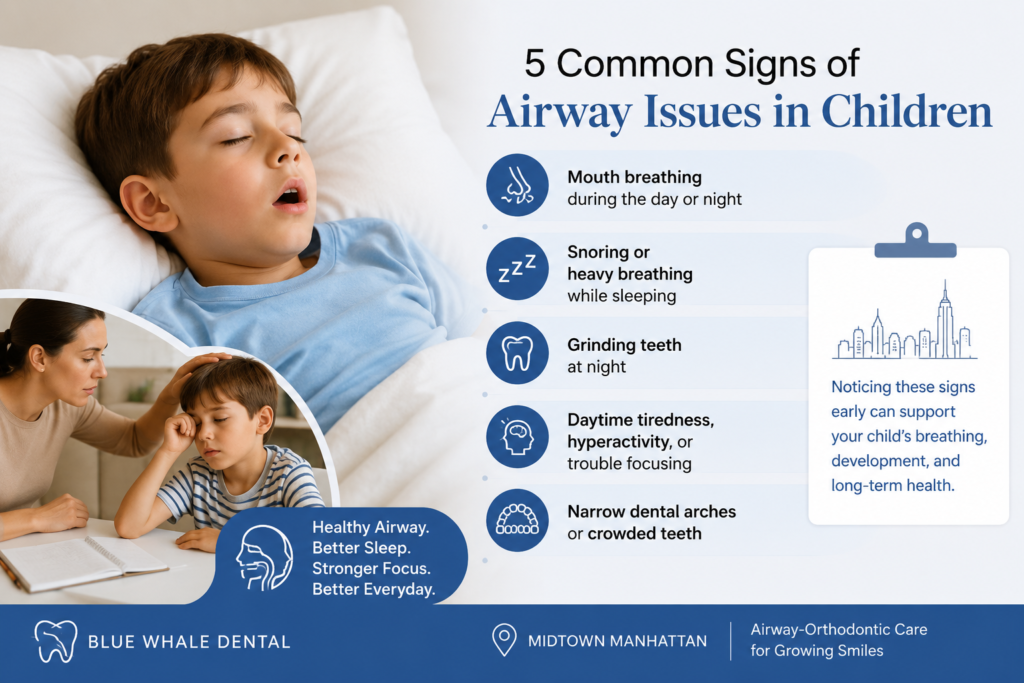
Watch for these subtle clues in your Midtown child:
- Mouth breathing during the day or night
- Snoring or heavy breathing while sleeping
- Grinding teeth at night
- Daytime tiredness, hyperactivity, or trouble focusing
- Narrow dental arches or crowded teeth
If several signs are present, an early evaluation can provide clarity.
Conclusion: Better Breathing Starts with Better Jaw Development
Your child’s jaw growth does more than create a beautiful smile it directly influences how well they breathe, sleep, and thrive during their important developmental years in NYC.
If you’ve noticed mouth breathing, snoring, or signs of poor sleep quality, don’t wait. Early airway assessment can open up new possibilities for your child’s health and comfort.
At Blue Whale Dental in Midtown Manhattan, we provide comprehensive evaluations that look at both smile alignment and airway health in a calm, supportive environment.
Concerned about your child’s breathing or sleep?
FAQs: Airway Orthodontics for Kids
What is airway orthodontics for kids exactly?
It’s an approach that considers how jaw and palate development affect breathing space, not just tooth alignment.
Can orthodontics really help with sleep issues?
In many cases, yes by improving airway volume through guided jaw growth. However, we always recommend collaborating with pediatricians or sleep specialists for proper diagnosis.
At what age should we check for airway concerns?
The earlier the better. Many experts recommend screening around age 7, alongside the standard AAO orthodontic evaluation.
Is this only for children with severe snoring?
No. Even mild mouth breathing or subtle signs can benefit from early guidance before habits become harder to change.
How does Blue Whale Dental approach this?
We offer comfortable, child-friendly evaluations using modern digital tools in our Midtown Manhattan office, with a focus on gentle, anxiety-free care.